Telecom Personal Flow
Liderando UX a través de una transformación digital compleja, conectando equipos, procesos y decisiones de producto a gran escala.
Lideré el trabajo de UX dentro del programa de transformación digital de Telecom Personal Flow, coordinando a diseñadores de múltiples células de producto. Me centré en mejorar la alineación, la planificación de entregas y el onboarding del equipo dentro del ecosistema de Mi Personal Flow.
Empresa
Telecom Personal Flow
Industria
Telecomunicaciones / Transformación digital
Rol
UX Lead Designer
Tipo de producto
App móvil / Ecosistema de autogestión y e-commerce
Duración
Oct 2021 – Feb 2024
Equipo
Diseñadores UX/Content, POs, Negocio, Tecnología, Liderazgo de Telecom y Globant
Métodos
Liderazgo UX, Design Operations, Agile Scrum, Discovery, User Flows, Arquitectura de la Información, Críticas de diseño, Estimación, Onboarding
Herramientas
Figma, FigJam, Miro, Jira, Confluence, Notion, Maze, Hotjar, Asana
Estado
Hito lanzado / Liderazgo de diseño / Bajo NDA
Confidencialidad
Parte de este proyecto está bajo NDA: las pantallas sensibles, el roadmap y la documentación interna aparecen difuminados o simplificados. Puedo compartir más detalle en una entrevista o revisión de portafolio.
Contexto
Telecom Personal Flow fue parte de un gran programa de transformación digital en Argentina, enfocado en evolucionar las experiencias digitales de autogestión y e-commerce dentro de un ecosistema de producto complejo.
Me uní a la cuenta en pleno cambio organizacional y de marca. Con el tiempo pasé a liderar UX en clusters como Self, Retention & Loyalty y Upper Funnel, y más adelante fui representante de UX en la iniciativa Upgrade de Mi Personal Flow.
Por qué importaba
Lo que más importaba era construir alineación entre células, arreglar la forma en que los diseñadores estimaban y entregaban su trabajo, y darle a la práctica de UX la estructura suficiente para sobrevivir en un entorno en constante cambio.
Mi rol
Trabajé como UX Lead Designer, liderando y apoyando a diseñadores UX en múltiples células de producto. Combiné liderazgo, mejora de procesos, mentoring y contribución directa a iniciativas como el Upgrade de Mi Personal Flow.
- Lideré a seis diseñadores UX distribuidos en cinco células de autogestión.
- Coordiné el trabajo de UX entre diseñadores de Telecom y Globant.
- Apoyé la planificación, la estimación y los rituales del equipo de UX.
- Construí material de onboarding para que los nuevos diseñadores se integraran de forma más autónoma.
- Ayudé a identificar brechas de proceso y a proponer formas de trabajo que mejoraron la visibilidad y la colaboración.
El reto
El principal reto fue liderar UX en un ecosistema digital grande y cambiante, donde múltiples equipos trabajaban en paralelo, la claridad del roadmap era limitada, y las decisiones de diseño individuales podían afectar la experiencia de usuario global.
- Reto de usuario: los usuarios necesitaban una experiencia de autogestión más clara y consistente mientras el producto evolucionaba en varias áreas a la vez.
- Reto de negocio: Telecom necesitaba sacar adelante el lanzamiento de Mi Personal Flow coordinando muchos equipos y compromisos de entrega.
- Reto de diseño: el equipo de UX necesitaba mejor estimación, documentación compartida y una visión transversal de la experiencia.
Problem statement
¿Cómo podríamos ayudar a múltiples equipos de UX a entregar una experiencia de autogestión más consistente, mejorando a la vez la colaboración y la planificación dentro de un programa de transformación complejo?
Objetivos y criterios de éxito
Objetivos de usuario
- Apoyar una experiencia de autogestión más clara y consistente.
- Reducir la fragmentación entre journeys diseñados por distintas células.
Objetivos de negocio
- Apoyar el hito de lanzamiento de Mi Personal Flow.
- Mejorar la previsibilidad de entrega y la coordinación de UX entre células.
Objetivos de diseño
- Mejorar la estimación, la planificación y los rituales de equipo en UX.
- Crear documentación reutilizable y material de onboarding.
- Conectar las decisiones de diseño individuales con el ecosistema más amplio.
Proceso
01 — Descubrir
Entender el ecosistema, los equipos y las brechas de entrega
Empecé por entender cómo estaba organizado el equipo de UX, cómo trabajaba cada célula y dónde se rompía la colaboración. El reto no era solo el producto, sino el modelo operativo alrededor del diseño: niveles de experiencia distintos, expectativas dispares y un roadmap que no siempre era claro.
- Revisé cómo estaban distribuidos los diseñadores entre células y áreas de producto.
- Identifiqué brechas en estimación, comunicación, documentación y visibilidad de entrega.
- Mapeé las dependencias entre diseño, contenido, producto y tecnología.
- Identifiqué puntos de dolor en el onboarding de los nuevos diseñadores.
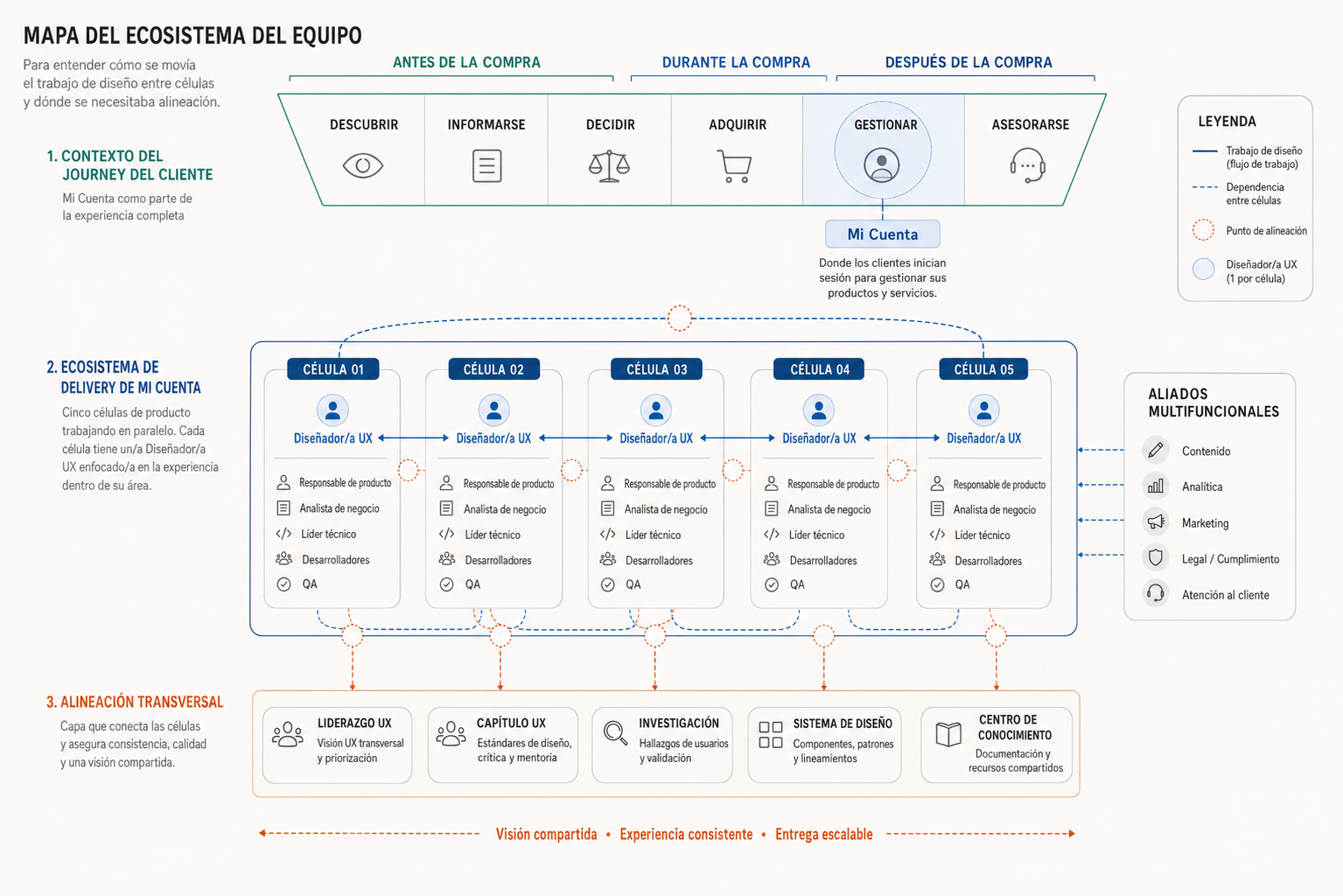
Mapa del ecosistema de equipo usado para entender cómo se movía el trabajo de diseño entre células y dónde se necesitaba alineación.
02 — Definir
Crear una dirección UX transversal entre células
Después de entender el contexto, me enfoqué en crear formas de trabajo más claras: mejor estimación, rituales más sólidos y documentación que conectara el trabajo de cada célula con la experiencia completa.
- Definí oportunidades de mejora para la planificación, la estimación y los rituales de UX.
- Ayudé a crear espacios de alineación entre UX, contenido, producto y tecnología.
- Estructuré el material de onboarding para que los nuevos diseñadores accedieran a información actualizada por su cuenta.
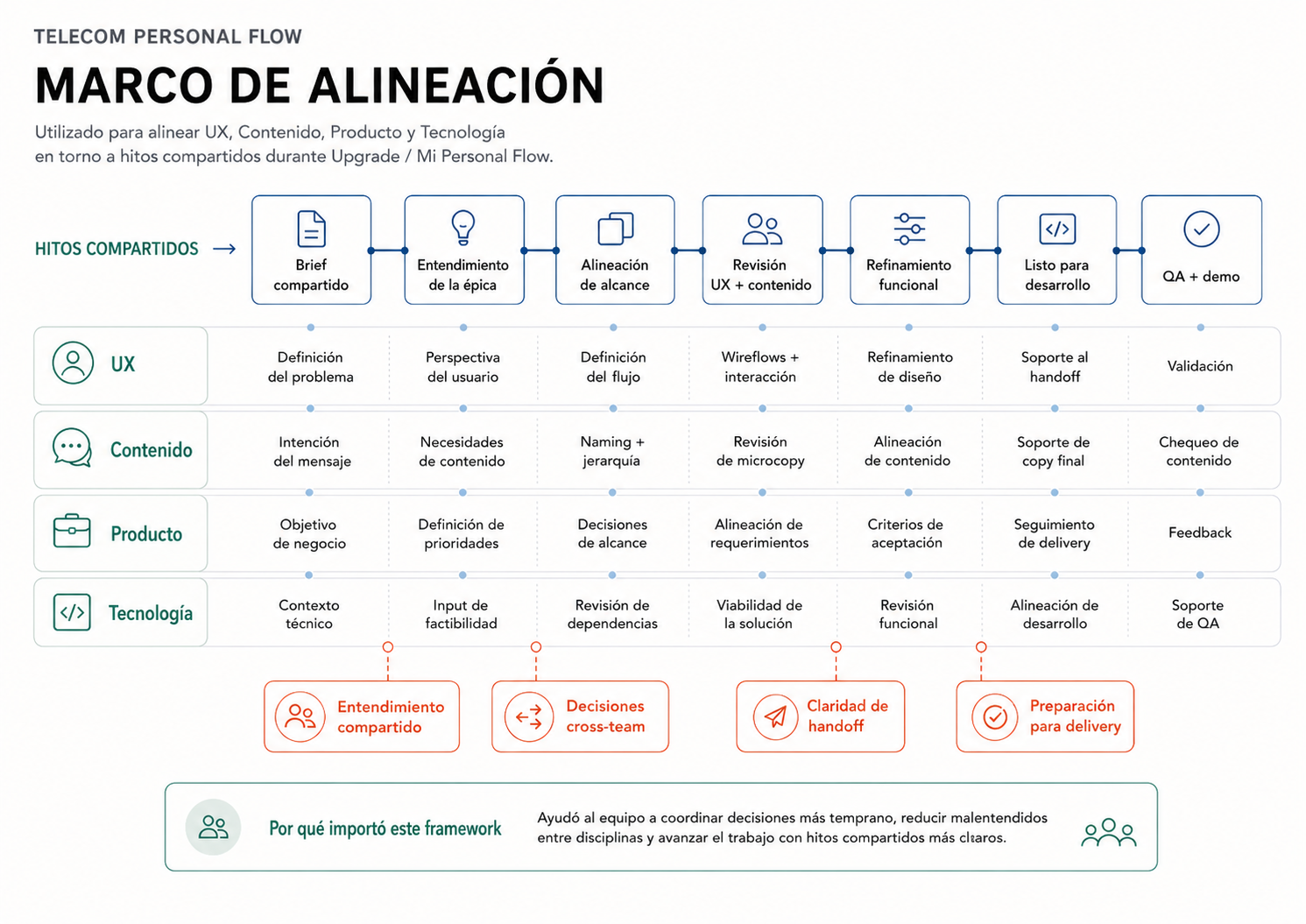
Marco de alineación usado para mejorar la forma en que UX, contenido, producto y tecnología colaboraban en torno a hitos compartidos.
03 — Desarrollar
Mejorar procesos, onboarding y consistencia de entrega
Con las brechas identificadas, trabajé en mejoras prácticas: menos dependencia de los líderes para explicaciones repetidas y mejor acceso a información actualizada.
- Mejoré las prácticas de estimación entre diseñadores UX y células de producto.
- Creé una estructura de onboarding de autoservicio.
- Apoyé críticas de diseño y ciclos de feedback para mejorar la calidad de entrega.
- Coordiné con diseñadores de Telecom y Globant para mejorar la colaboración.
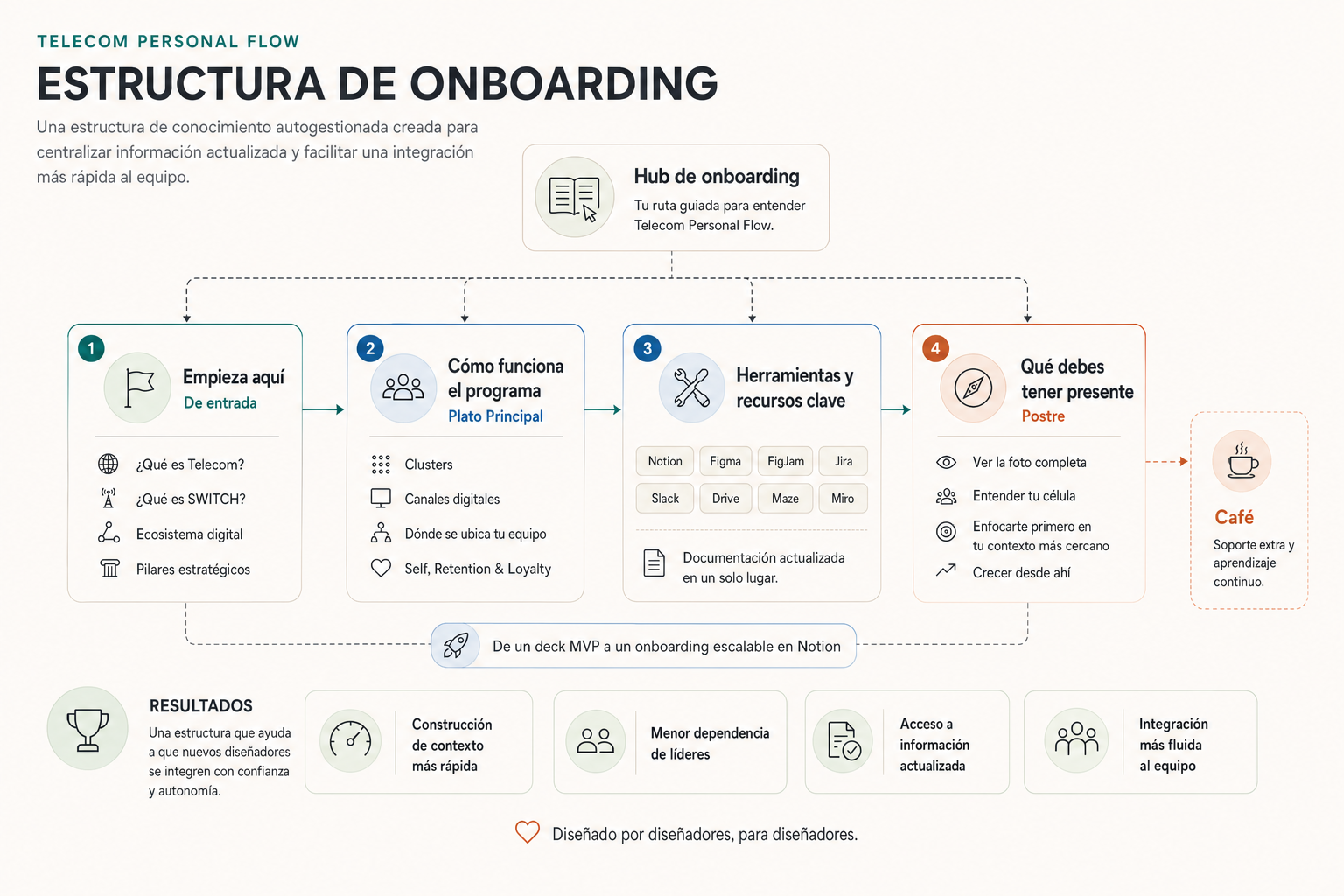
Estructura de onboarding creada para ayudar a los nuevos diseñadores a acceder a información actualizada e integrarse con menos dependencia de los líderes.
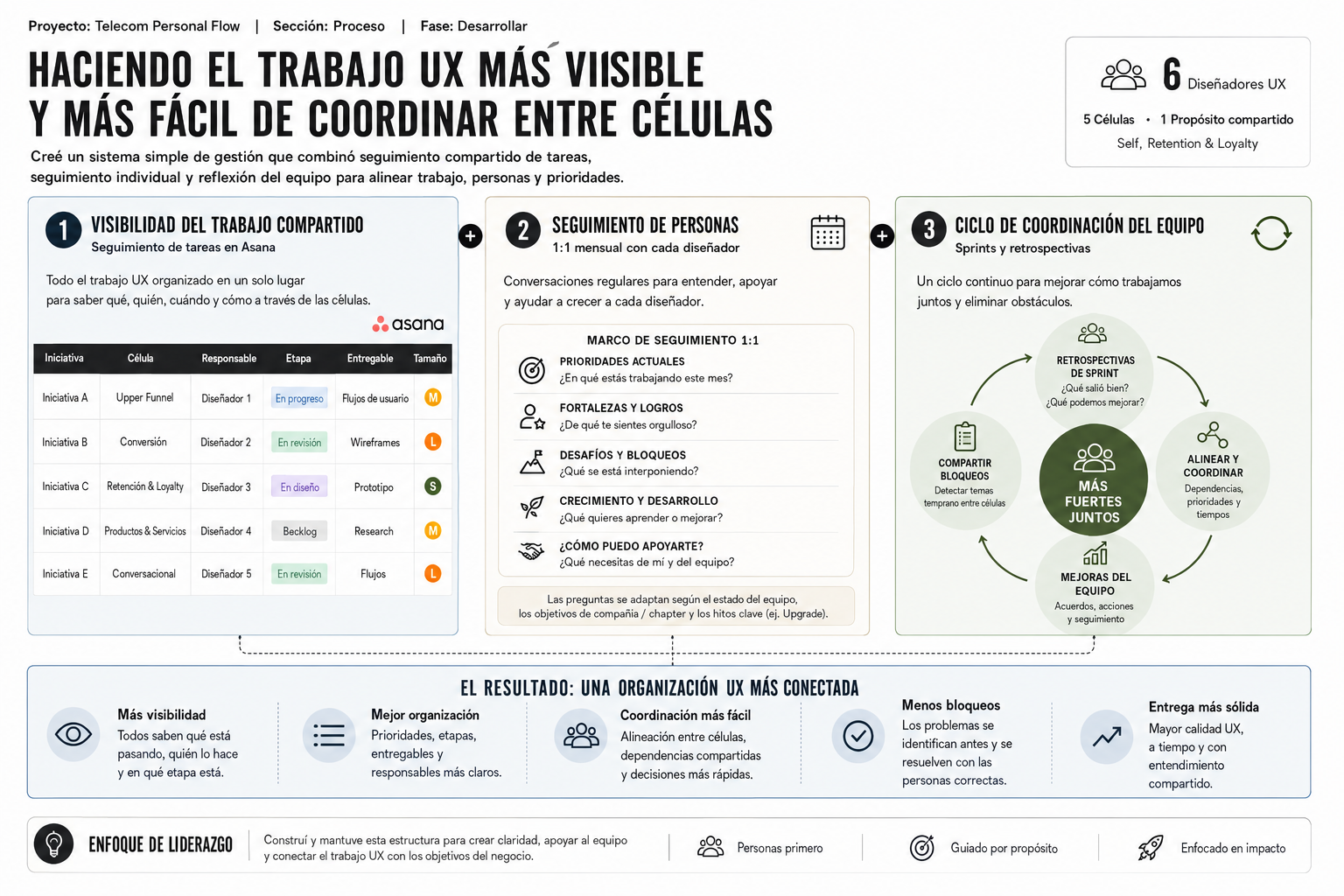
Diagrama de proceso que muestra cómo el trabajo de UX se volvió más visible, organizado y fácil de coordinar entre células.
04 — Entregar
Apoyar el hito de lanzamiento de Mi Personal Flow
A pesar de la ambigüedad inicial del roadmap, el equipo de UX completó el 100% de sus entregables para el hito de lanzamiento de Mi Personal Flow.
- Mejoré la estimación de UX y la planificación de entregas en múltiples células.
- Creé material de onboarding usado por más de 10 diseñadores tras sumarse a la cuenta.
- Los nuevos diseñadores se integraron de forma más autónoma, recurriendo a los líderes solo para dudas y seguimiento.
- Contribuí a la iniciativa Upgrade promoviendo una visión UX transversal en todo el ecosistema.
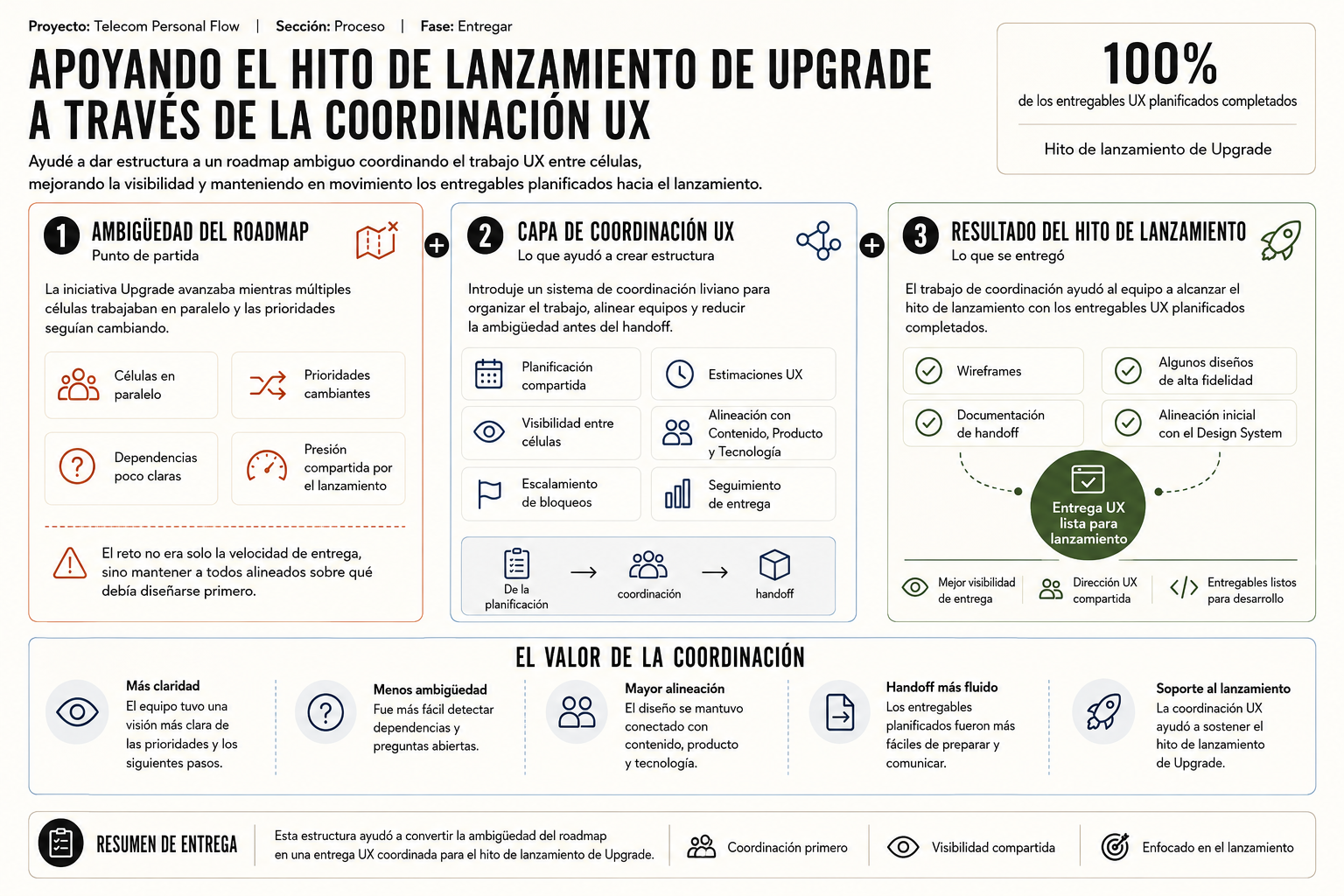
Resumen de entrega que muestra cómo la coordinación de UX apoyó el hito de lanzamiento a pesar de la ambigüedad del roadmap.
Antes / después
Antes
Formas de trabajo fragmentadas, onboarding inconsistente y múltiples equipos diseñando en paralelo bajo un roadmap ambiguo.
Después
Rituales de alineación más sólidos, mejor estimación, onboarding reutilizable y una visión transversal de la experiencia Mi Personal Flow.
Solución final
El trabajo se enfocó en tres mejoras:
Liderazgo UX más sólido entre células
Coordiné a los diseñadores de varias células en torno a objetivos de entrega compartidos, con más comunicación y visibilidad.
Mejores design operations y onboarding
La documentación y el onboarding permitieron a los nuevos diseñadores integrarse sin depender tanto de los líderes.
Una visión de producto más transversal
Conecté las decisiones de diseño entre células para lograr una experiencia más consistente.
Impacto y resultados
Valor para el usuario
Una experiencia de autogestión más consistente, con decisiones de diseño conectadas entre células.
Valor para el negocio
El equipo de UX completó el 100% de sus entregables para el hito de lanzamiento de Mi Personal Flow.
Valor de equipo / proceso
Material de onboarding usado por más de 10 diseñadores, con menos dependencia de los líderes.
Valor de producto / sistema
Mejor alineación, estimación y colaboración entre células.
Obstáculos y trade-offs
El reto era mantener al equipo entregando mientras, al mismo tiempo, construíamos mejores formas de trabajo.
- Liderar diseñadores con distintos niveles de experiencia.
- Trabajar con la ambigüedad del roadmap y prioridades cambiantes.
- Crear rituales de equipo sin frenar la entrega.
- Ayudar a los diseñadores a ganar autonomía manteniendo la consistencia.
Qué aprendí
Este proyecto fue una de las experiencias más importantes en mi crecimiento como UX Lead. Me enseñó que liderar diseño es crear las condiciones para que los equipos decidan mejor juntos, no controlar cada decisión.
- Aprendí a liderar equipos de UX en entornos complejos y cambiantes.
- Aprendí que el onboarding es un problema de diseño: si la información no está estructurada, el equipo no puede escalar.
- Las mejoras de proceso solo funcionan cuando responden a necesidades reales del equipo.
- Aprendí a pensar más allá de las pantallas y contribuir al modelo operativo del diseño.
Lo que los líderes dijeron sobre mi trabajo
Steph es una líder que nunca deja de crecer, se mantiene enfocada y guía con asertividad. Sus habilidades analíticas y su capacidad para manejar situaciones complejas son clave.
Magali Amalla, Head Design
Tiene una visión holística que le permite ir más allá del rol de UX, considerando aspectos técnicos y de negocio al proponer soluciones.
Nicolas Andres Semeniuk, Technical Lead
Telecom es probablemente el proyecto que más me formó como UX Lead: trabajar dentro de un ecosistema genuinamente complejo, apoyar a los equipos a través de ambigüedad real, y preocuparme tanto por cómo opera el diseño como por lo que produce.
Stephanie Cacheo — Senior Product Designer / UX Lead