Banco Falabella — Lía Chatbot
Diseñando un asistente conversacional que convirtió servicios financieros complejos en interacciones guiadas y escalables.
Ayudé a Banco Falabella a diseñar y entrenar a Lía, un asistente conversacional para servicios de banco, CMR, viajes y seguros. Construí flujos conversacionales, intents y templates guiados que mejoraron la capacidad del chatbot para responder por sí solo.
Empresa
Banco Falabella Colombia
Industria
Finanzas / Banca minorista
Rol
UX Specialist / UX Designer
Tipo de producto
Asistente conversacional / Chatbot
Duración
Mar 2017 – Ago 2019
Equipo
UX, Product, Business Stakeholders, Desarrollo, Chatbot/NLP, Contenido
Métodos
Conversational UX, IA (arquitectura de información), Intent Design, Flow Mapping, Templates, Entrenamiento, Validación
Herramientas
Sketch, Zeplin, Balsamiq, DialogFlow, Adobe XD, Adobe Creative Cloud
Estado
Lanzado
Confidencialidad
Parte de este proyecto está bajo NDA: los flujos de conversación sensibles, las reglas de negocio y la lógica interna aparecen simplificados. Puedo compartir más detalle en una entrevista o revisión de portafolio.
Contexto
Banco Falabella necesitaba un canal conversacional para cuatro negocios financieros: Banco, CMR, Viajes y Seguros. Cada línea tenía servicios y expectativas distintas, pero los clientes necesitaban un solo asistente simple y amigable.
La parte difícil no era escribir buenas respuestas, sino construir una estructura que guiara a los usuarios y ayudara al asistente a responder con precisión ante solicitudes muy distintas.
Por qué importaba
Los servicios financieros se vuelven confusos muy rápido cuando se le pide al usuario que explique todo con sus propias palabras. Lía necesitaba una arquitectura de información sólida, rutas controladas y un tono amigable para que la gente avanzara sin perderse.
Mi rol
Trabajé como UX Specialist con enfoque en Conversational UX: estructuré la lógica del asistente, definí flujos guiados, entrené intents y ayudé a crear una metodología para mejorar el chatbot con el tiempo.
- Diseñé flujos conversacionales para casos de uso de banco, CMR, viajes y seguros.
- Estructuré intents, templates y patrones de interacción guiados.
- Ayudé a entrenar a Lía identificando qué información necesitaba el chatbot y qué podía generar confusión.
- Trabajé con stakeholders de negocio para entender servicios y solicitudes esperadas.
- Diseñé assets visuales y componentes de interfaz para la UI del chatbot.
El reto
El principal reto era diseñar un chatbot que pudiera dar soporte a múltiples servicios financieros sin abrumar a los usuarios ni comprometer la calidad de respuesta del asistente.
- Reto de usuario: los usuarios necesitaban respuestas rápidas, pero las preguntas abiertas generaban confusión y callejones sin salida.
- Reto de negocio: un solo asistente tenía que atender cuatro líneas de negocio con una experiencia consistente.
- Reto de diseño: el sobreentrenamiento generaba respuestas deficientes, así que la experiencia necesitaba estructura clara e intents bien organizados.
Problem statement
¿Cómo podríamos atender banco, CMR, viajes y seguros con un solo asistente amigable, manteniendo la conversación lo bastante estructurada para que el chatbot responda con precisión?
Objetivos y criterios de éxito
Objetivos de usuario
- Ayudar a los usuarios a encontrar respuestas sin navegar por múltiples canales.
- Reducir la confusión causada por interacciones abiertas del chatbot.
Objetivos de negocio
- Dar soporte a múltiples líneas de negocio a través de un solo asistente conversacional.
- Aumentar la capacidad del chatbot para resolver consultas y transacciones de forma autónoma.
Objetivos de diseño
- Definir flujos conversacionales y estructuras de intents claras.
- Usar templates guiados para reducir la ambigüedad.
- Mejorar el entrenamiento del chatbot a través de una mejor arquitectura de información.
Proceso
01 — Descubrir
Entender cómo piden ayuda los usuarios en cada servicio financiero
Primero entendí las líneas de negocio y el tipo de soporte que los usuarios necesitaban de cada una: dónde se volvían ambiguas las conversaciones y qué temas requerían flujos controlados en lugar de preguntas abiertas.
- Identifiqué solicitudes recurrentes, consultas y necesidades transaccionales.
- Mapeé dónde las conversaciones abiertas podían generar malentendidos.
- Analicé cómo debía agruparse la información para que el chatbot fuera más fácil de entrenar y de usar.
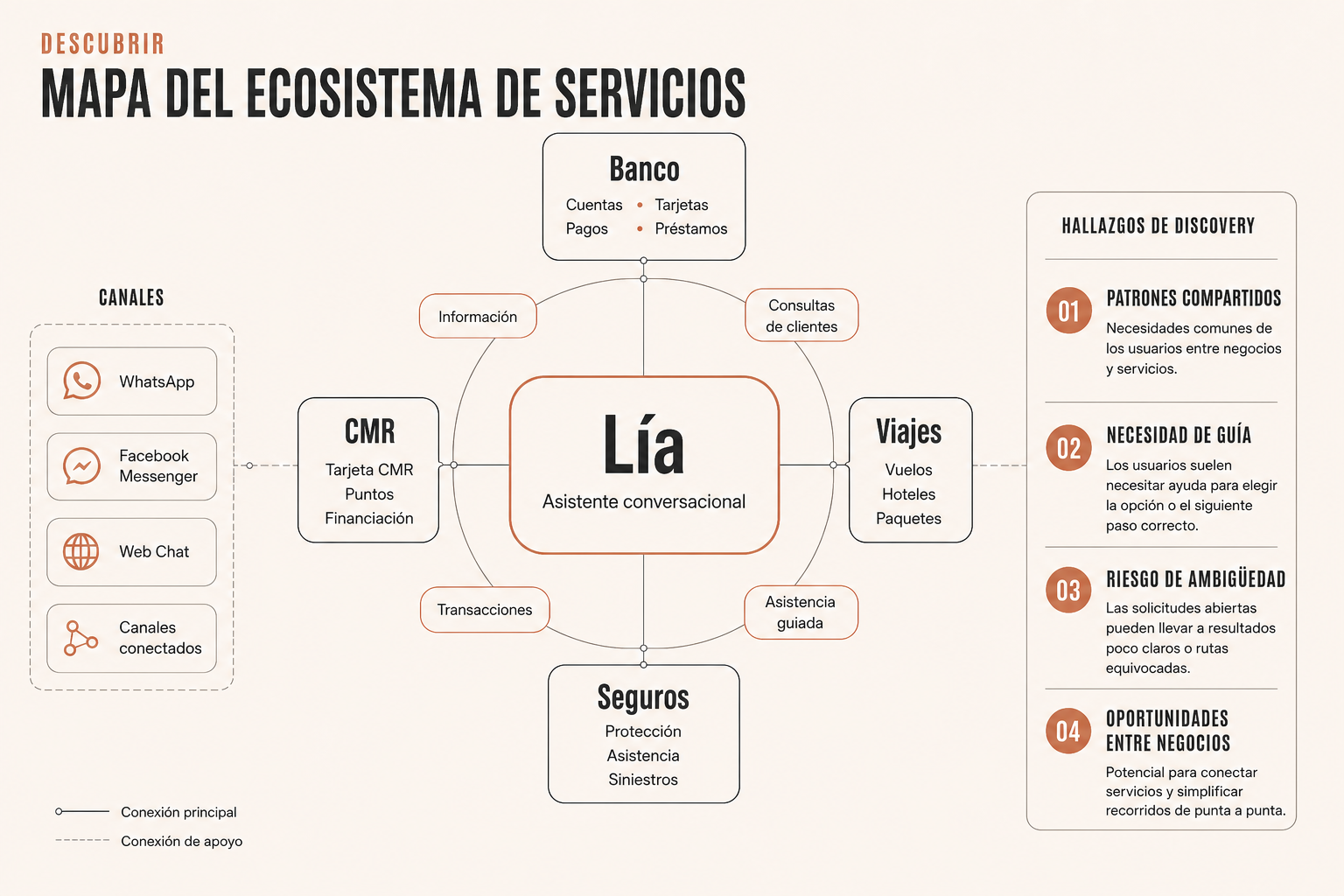
Estructura temprana de discovery usada para entender cómo podían convivir distintos servicios financieros dentro de un solo asistente conversacional.
02 — Definir
Convertir servicios dispersos en una arquitectura conversacional
Luego definí la estructura detrás del asistente: organizar intents, decidir cuándo usar templates y dar forma a un modelo donde el usuario elige opciones en lugar de describir todo desde cero.
- Agrupé intents por línea de negocio, necesidad del usuario y resultado esperado.
- Definí rutas guiadas para consultas y transacciones frecuentes.
- Ayudé a definir cómo debía comportarse Lía cuando no entendía una solicitud.
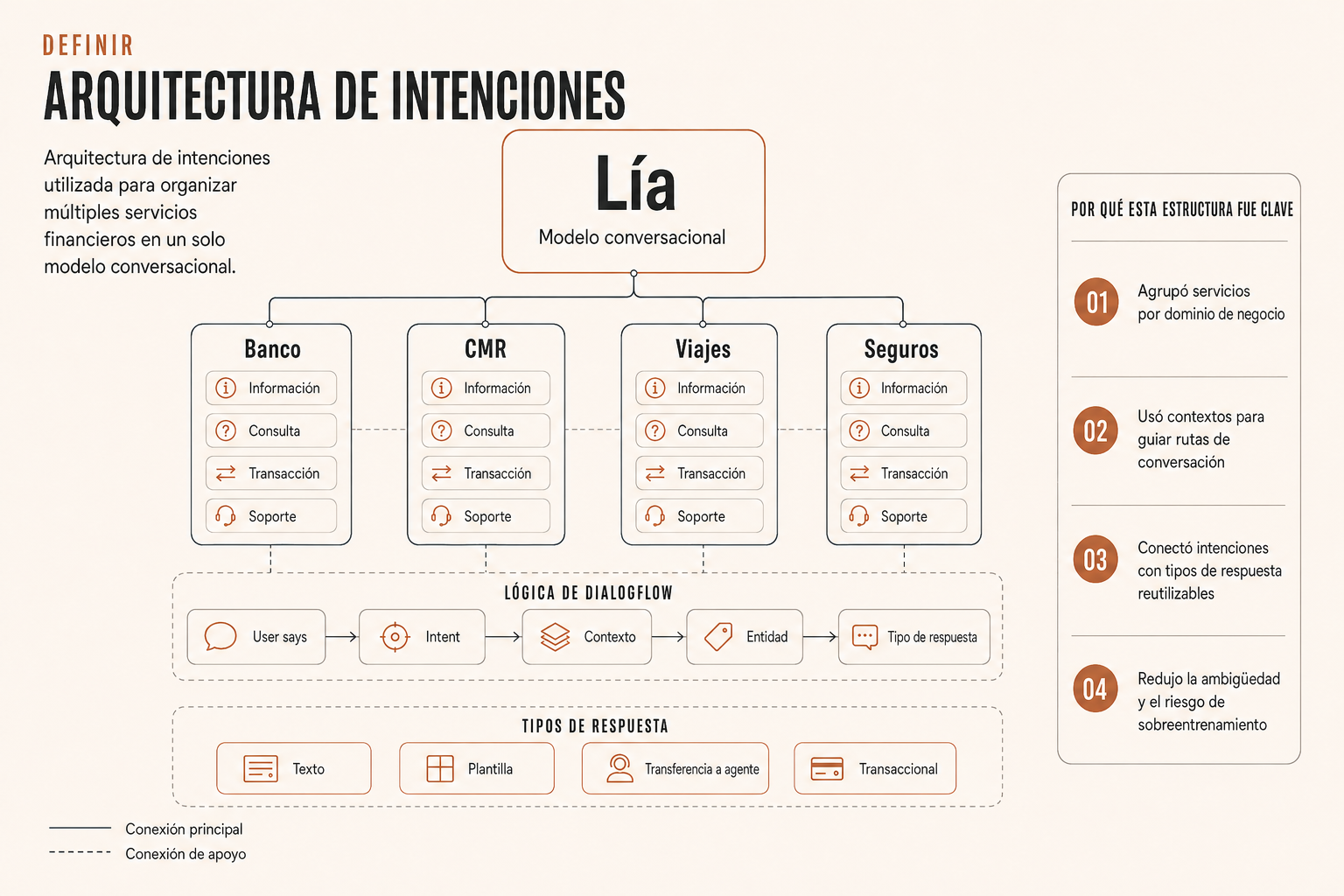
Arquitectura de intents usada para organizar múltiples servicios financieros dentro de un solo modelo conversacional.
03 — Desarrollar
Diseñar flujos guiados en lugar de conversaciones totalmente abiertas
La decisión más importante fue no tratar al chatbot como un sistema de preguntas totalmente abierto: demasiada libertad hacía la experiencia menos confiable. Los flujos guiados y los templates redujeron el riesgo de respuestas equivocadas.
- Diseñé flujos conversacionales para los casos de uso clave.
- Creé templates guiados para ayudar a los usuarios a elegir la ruta correcta.
- Ajusté flujos cuando los resultados de entrenamiento mostraban confusión o respuestas incorrectas.
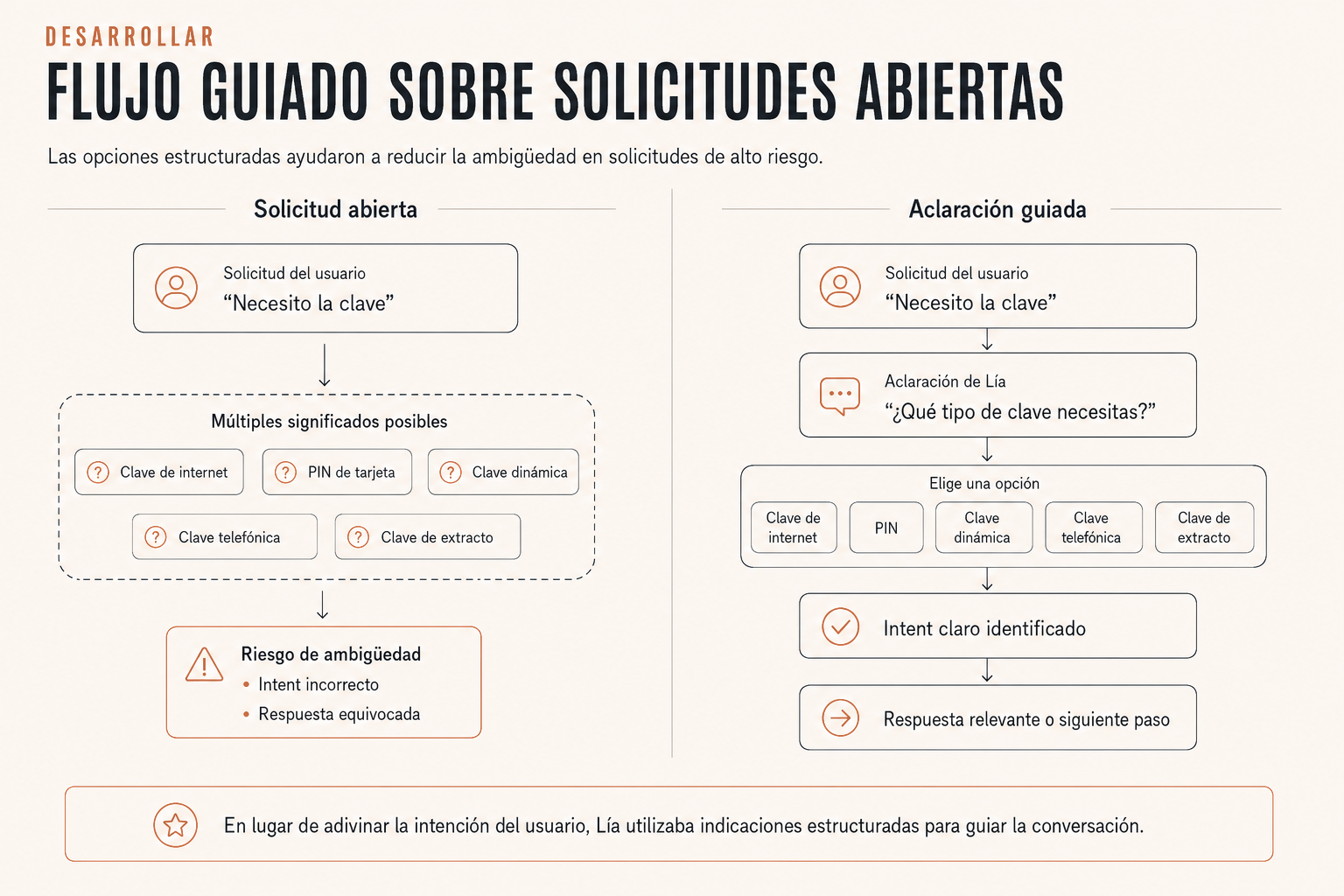
Ejemplo de flujo guiado que muestra cómo las opciones estructuradas redujeron la ambigüedad frente a las preguntas abiertas.
04 — Entregar
Lanzar un asistente más amigable y escalable
El resultado fue un asistente capaz de atender varios negocios financieros con una experiencia amigable y estructurada, diseñado para mejorar con el tiempo mediante un entrenamiento más intencional.
- Entregué flujos conversacionales, templates y estructuras de intents.
- Mejoré la calidad de las interacciones reduciendo el sobreentrenamiento y las entradas ambiguas.
- Construí una base reutilizable de Conversational UX para futuras mejoras.
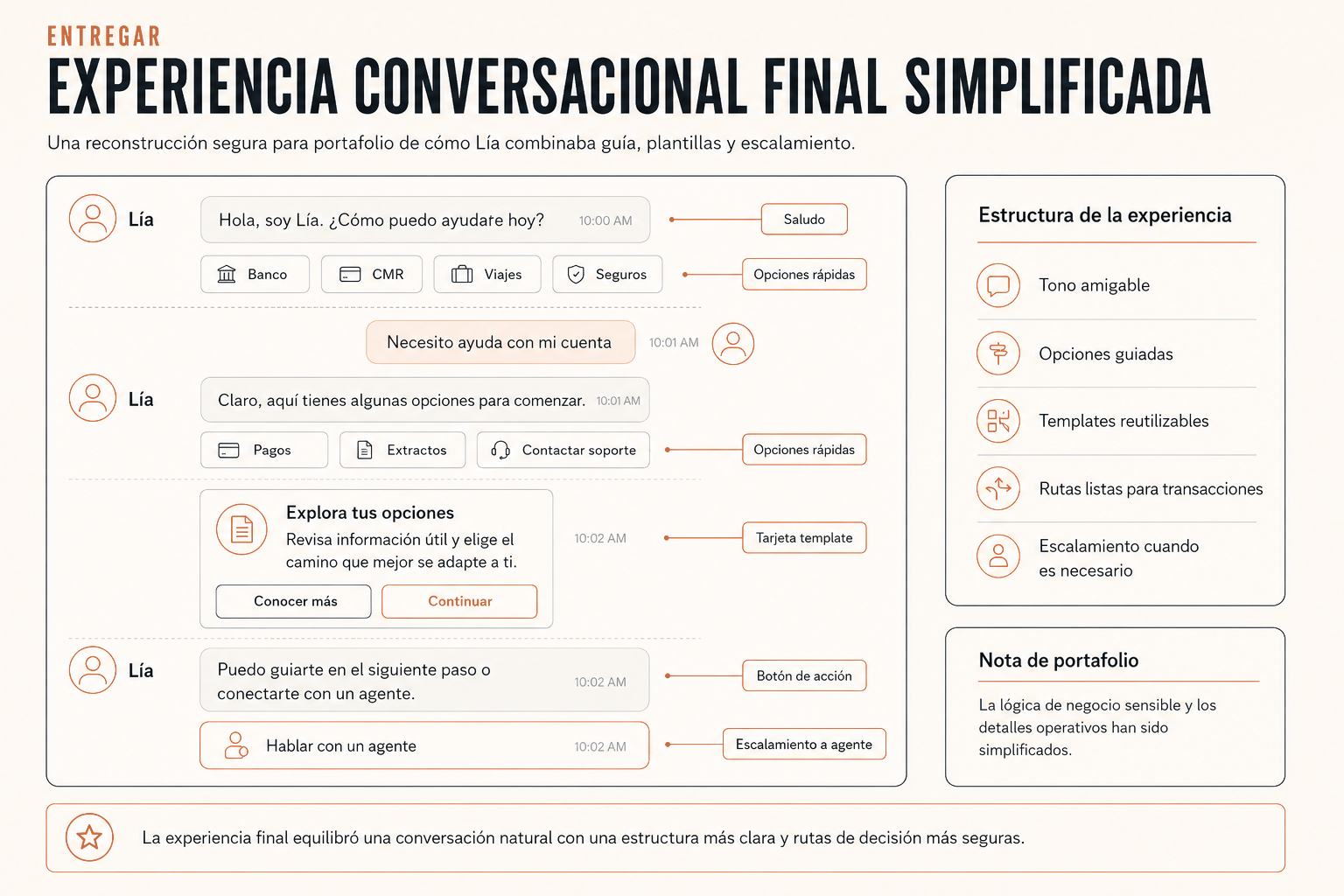
Experiencia conversacional final simplificada para efectos de portafolio, mostrando la estructura sin exponer lógica de negocio sensible.
Antes / después
Antes
Las entradas abiertas y el entrenamiento sobrecargado hacían que el chatbot respondiera mal o generara interacciones confusas.
Después
Lía atendió Banco, CMR, Viajes y Seguros con flujos claros, templates guiados e intents estructurados.
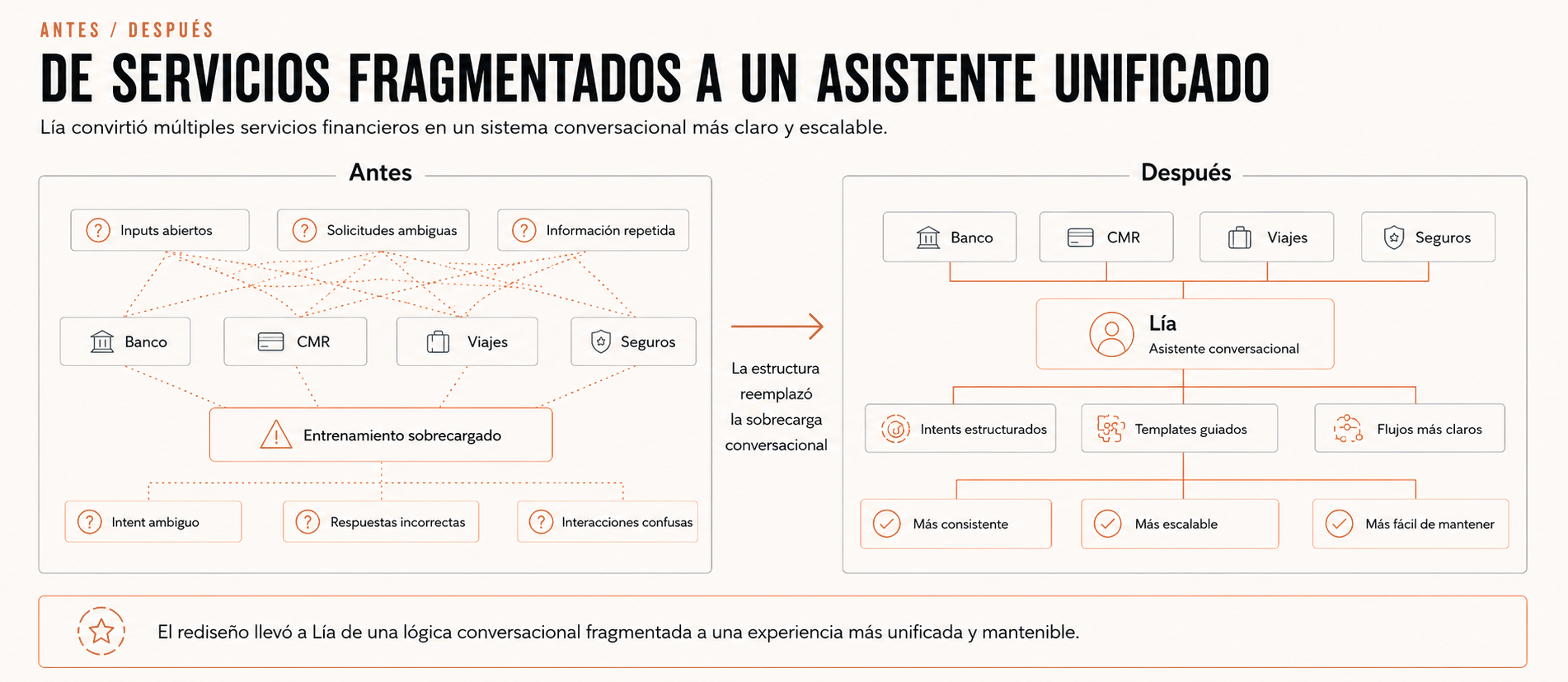
Comparación del modelo conversacional antes y después, que muestra cómo las rutas estructuradas reemplazaron las entradas abiertas que generaban respuestas fallidas.
Solución final
La propuesta se enfocó en tres mejoras:
Un modelo conversacional guiado
En lugar de depender solo de preguntas abiertas, Lía usó templates y rutas estructuradas para ayudar a los usuarios a avanzar con menos confusión.
Una arquitectura de intents escalable
El asistente se organizó por línea de negocio, necesidad y resultado esperado, lo que hizo más fácil entrenarlo y evolucionarlo.
Un asistente financiero más amigable
Lía se diseñó para sentirse cercana y útil, y hacer el soporte financiero menos intimidante.
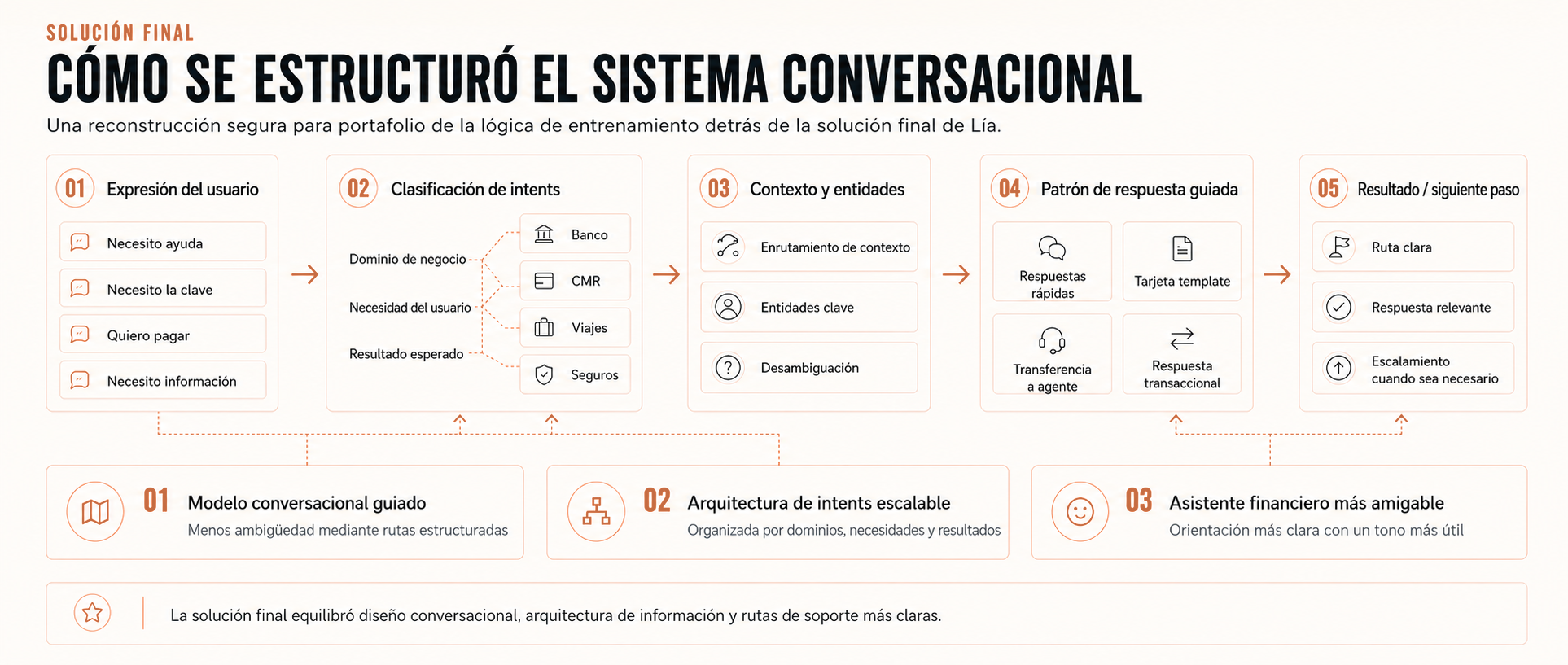
Resumen de la solución final, donde los tres pilares —flujo guiado, arquitectura de intents y tono cercano— operan dentro de una misma conversación.
Impacto y resultados
Valor para el usuario
Soporte en cuatro servicios financieros a través de un solo asistente guiado.
Valor para el negocio
Una sola estructura conversacional para Banco, CMR, Viajes y Seguros.
Valor para el producto
El chatbot alcanzó una tasa de éxito autónomo del 70% en consultas y en la conversión de transacciones financieras completas.
Valor para el equipo / proceso
Una base sólida para el entrenamiento del chatbot y la organización de intents.
Obstáculos y trade-offs
El equilibrio estuvo entre la libertad del usuario, la cobertura de negocio y la confiabilidad del chatbot, en un entorno regulado que exigía coordinar cada flujo con legal y compliance. La solución sólida fue estructurar mejor la experiencia, no agregar más contenido.
- Evitar el sobreentrenamiento sin dejar de cubrir múltiples necesidades de negocio.
- Equilibrar los templates guiados con la expectativa del usuario de una conversación natural.
- Mantener un tono amigable mientras se maneja información financiera.
Qué aprendí
Este proyecto marcó la forma en que pienso el UX, más allá de los chatbots: la estructura es lo que le permite a un producto escalar.
- La arquitectura de información es crítica en las experiencias conversacionales.
- Sobreentrenar un chatbot puede empeorar la experiencia, no mejorarla.
- Los flujos guiados pueden generar más confianza que la entrada totalmente abierta.
Con Lía aprendí a convertir la complejidad en estructura, y eso se me ha quedado desde entonces. Una buena experiencia conversacional se construye diseñando las rutas correctas y la guía justa para que los usuarios lleguen a donde quieren ir, no agregando más respuestas.
Stephanie Cacheo — Senior Product Designer / UX Lead