PetSafe Brands
Liderar una evaluación UX ágil para convertir la fricción de compra en móvil en un roadmap enfocado en conversión.
Lideré una evaluación UX de 6 semanas para cuatro marcas DTC de PetSafe: identificamos la fricción del funnel de compra en móvil y la tradujimos en un roadmap claro para mejorar la conversión.
Empresa
PetSafe Brands
Industria
E-commerce / DTC / Productos de consumo
Rol
UX Lead Designer
Tipo de producto
E-commerce móvil / PDP / Funnel de compra
Duración
Nov 2025 – Dec 2025
Equipo
UX Lead, UX Designer, Stakeholders del cliente, Analytics, Negocio, Producto
Métodos
Evaluación UX, Evaluación heurística, Benchmark, Journey Mapping, Revisión de Analytics, Wireframes, Prototipado, Roadmap estratégico, Storytelling ejecutivo
Herramientas
Figma, FigJam, Gemini, Google Analytics, Miro, Slides / Presentation tools
Estado
Evaluación entregada / Roadmap para implementación
Confidencialidad
Parte de este proyecto está bajo NDA: los datos de analytics y los hallazgos específicos de cada marca aparecen difuminados o simplificados. Puedo compartir más detalle en una entrevista o revisión de portafolio.
Contexto
PetSafe Brands necesitaba una evaluación UX estratégica en cuatro marcas DTC para entender por qué los usuarios abandonaban el funnel de compra en móvil, especialmente alrededor de la Product Detail Page y los momentos de decisión antes del checkout.
El timeline era muy comprimido: había que entender varias marcas rápido, revisar señales cualitativas y cuantitativas, y entregar un roadmap que sirviera para la siguiente fase de implementación.
Por qué importaba
Lo difícil fue conectar la fricción UX con los KPIs que importaban aquí (conversión e ingresos) y lograr que los stakeholders acordaran qué cambiar, por qué y en qué orden, en cuatro marcas distintas.
Mi rol
Trabajé como UX Lead Designer, liderando la estrategia de la evaluación para pasar de discovery a recomendaciones accionables en seis semanas.
- Coordiné la auditoría del funnel de compra en móvil, con foco en la PDP y el soporte a la decisión.
- Estructuré el enfoque de benchmark entre marcas y competidores.
- Ayudé a conectar hallazgos cualitativos, señales de analytics y heurísticas UX en un diagnóstico claro.
- Reformulé la narrativa del proyecto después de feedback crítico, en una secuencia más sólida: descubrimiento cualitativo, definición cuantitativa y diseño experto.
- Construí el storytelling final de la evaluación para conectar la fricción del usuario con el impacto de negocio.
El reto
El reto era diagnosticar la fricción de conversión en varias experiencias móviles en muy poco tiempo, alineando a los stakeholders en torno a un roadmap basado en evidencia.
- Reto de usuario: los usuarios necesitaban información de producto más clara y una PDP más fluida para comprar con seguridad.
- Reto de negocio: PetSafe buscaba oportunidades UX para subir la conversión de 1.01% a 2.19% en sus cuatro marcas.
- Reto de diseño: había que convertir mucha información y analytics complejos en una historia ejecutiva simple, rápido.
Problem statement
¿Cómo podríamos ayudar a los compradores en móvil a decidir con más claridad, identificando a la vez mejoras UX que apoyen el crecimiento de la conversión?
Objetivos y criterios de éxito
Objetivos de usuario
- Entender con claridad el valor del producto y las opciones de compra.
- Reducir la fricción en la PDP y en los momentos clave de decisión.
Objetivos de negocio
- Apoyar el objetivo de mover la conversión de 1.01% a 2.19%.
- Crear un roadmap que pudiera destrabar la siguiente fase de implementación.
Objetivos de diseño
- Construir un diagnóstico claro de la PDP y el funnel de compra.
- Combinar evaluación heurística, benchmark, revisión de analytics e input de los stakeholders.
- Contar los hallazgos de forma que los ejecutivos pudieran actuar sobre ellos.
Proceso
01 — Descubrir
Entender el funnel, las marcas y el problema de conversión
Con un timeline tan corto, el discovery tuvo que ser enfocado desde el inicio: las cuatro marcas, el recorrido de compra en móvil y la preocupación por la conversión.
- Revisé el funnel de compra en móvil, con atención a la PDP y los momentos de decisión.
- Coordiné una estrategia de benchmark para cada marca y sus competidores relevantes.
- Revisé señales de analytics para entender en qué punto los usuarios abandonaban.
- Identifiqué patrones de fricción recurrentes en navegación, información de producto y confianza.
Cómo usé la IA
Usé Gemini como espacio de proyecto para organizar los inputs del cliente, las notas del workshop y el análisis de cada marca, e identificar qué revisar en cada sitio. Las conclusiones finales fueron mías, basadas en criterio UX y el feedback de los stakeholders.
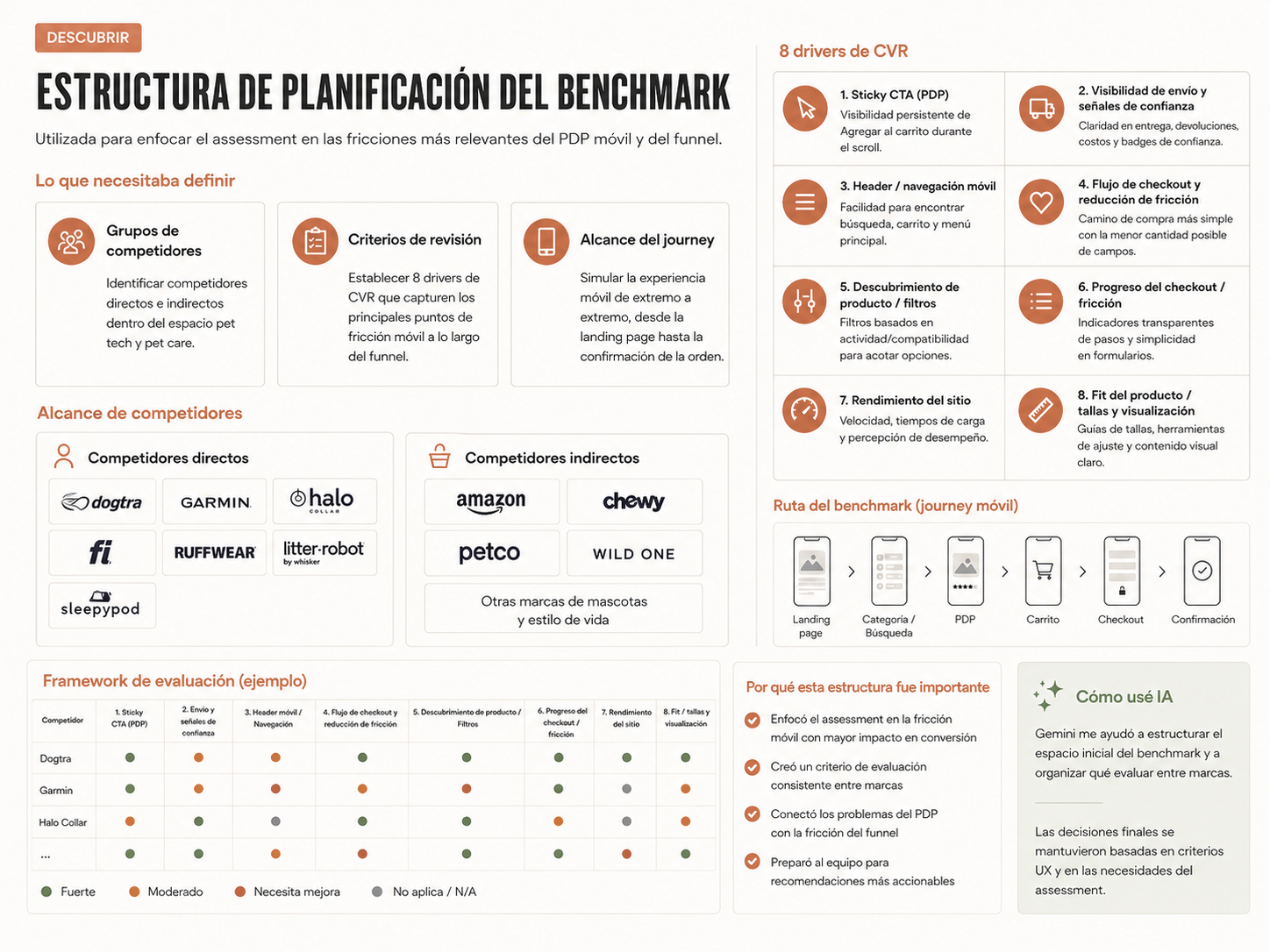
Estructura de planeación del benchmark usada para enfocar la evaluación en las fricciones más relevantes del PDP en móvil y del funnel.
02 — Definir
Convertir hallazgos dispersos en un diagnóstico claro
Después organicé los hallazgos para evitar una lista larga de observaciones desconectadas y construir un diagnóstico que conectara fricción, analytics e impacto de negocio.
- Conecté observaciones cualitativas con señales de analytics del funnel de compra.
- Prioricé los problemas según impacto, relevancia para la conversión y viabilidad.
- Reformulé la narrativa tras feedback crítico: descubrimiento cualitativo, definición cuantitativa y diseño experto.
Cómo usé la IA
Usé Gemini para sintetizar entre marcas y organizar los patrones en temas.
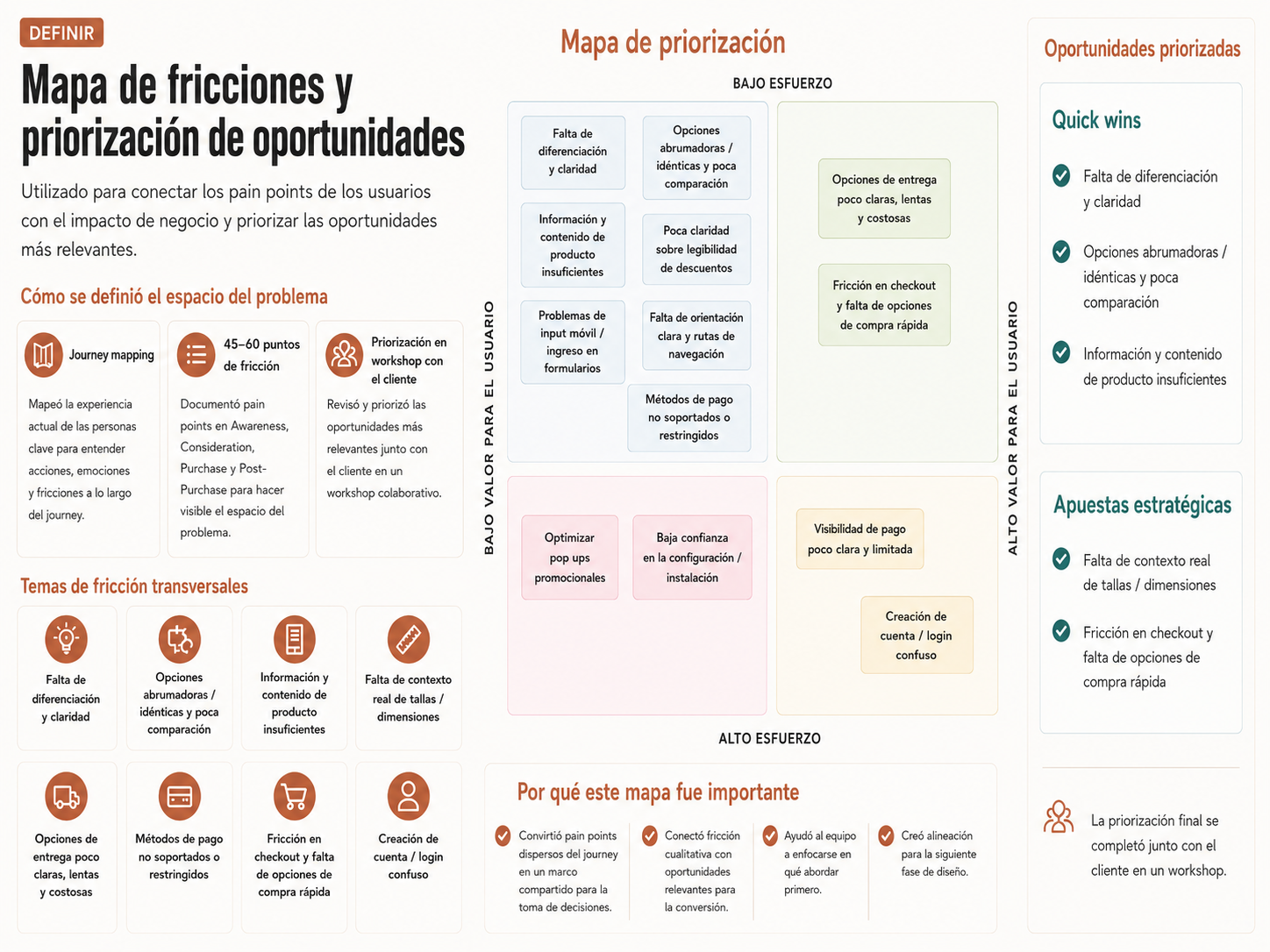
Mapa de fricción usado para conectar los pain points del usuario con el impacto de negocio y priorizar las oportunidades más relevantes.
03 — Desarrollar
Explorar recomendaciones UX y mejoras enfocadas en conversión
Con el diagnóstico claro, traduje las áreas de oportunidad en recomendaciones y wireframes. El foco era identificar los cambios con más efecto en la claridad y la confianza del recorrido de compra, no rediseñarlo todo.
- Exploré mejoras de estructura de la PDP, jerarquía de contenido y soporte a la decisión.
- Creé wireframes y prototipos para comunicar los cambios recomendados.
- Balanceé quick wins con oportunidades más amplias del roadmap.
Cómo usé la IA
Usé Gemini para generar ideas visuales y estructurales para la PDP a partir de los hallazgos de la evaluación.
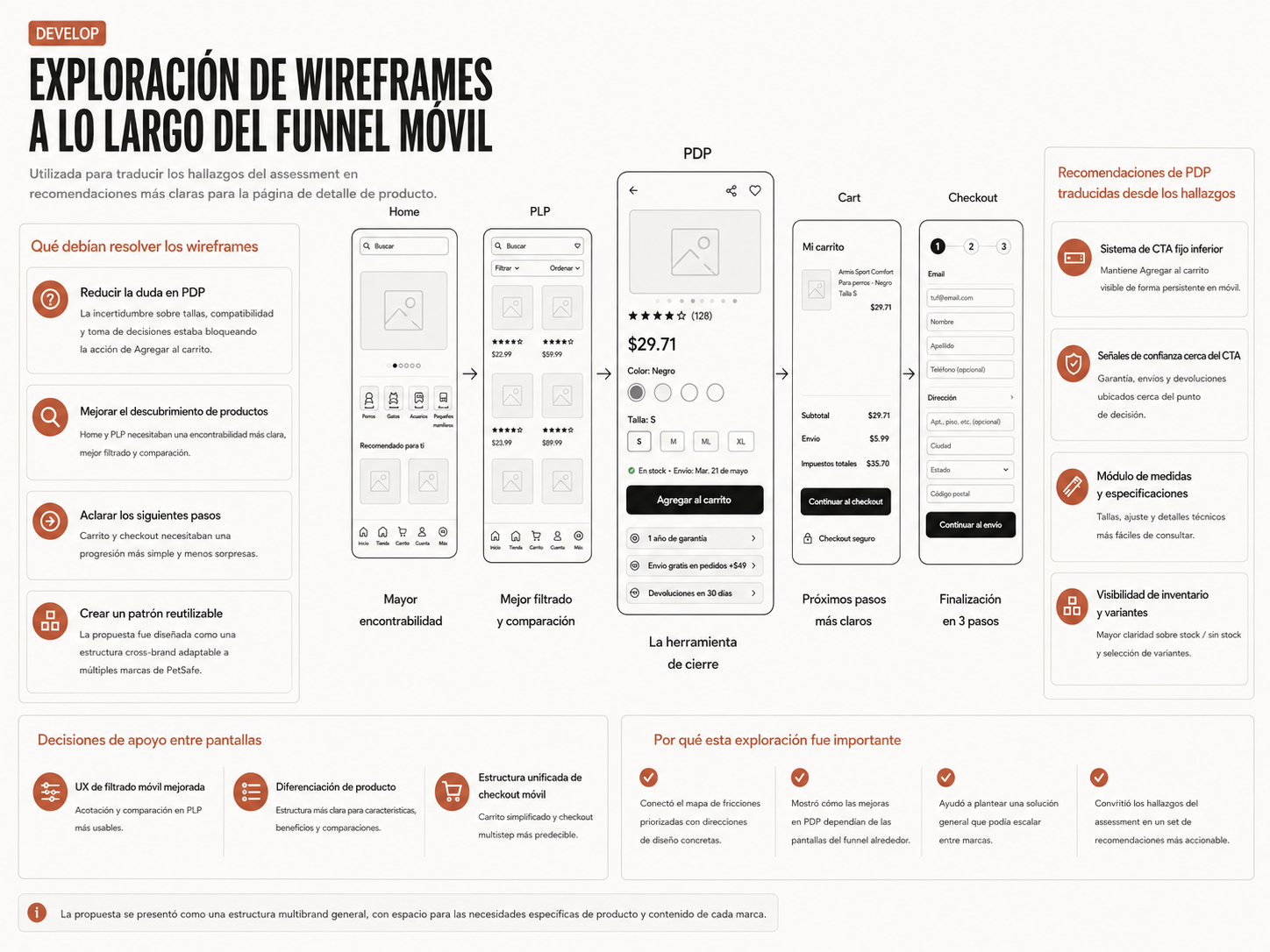
Exploración de wireframes usada para traducir los hallazgos de la evaluación en recomendaciones más claras para la product detail page.
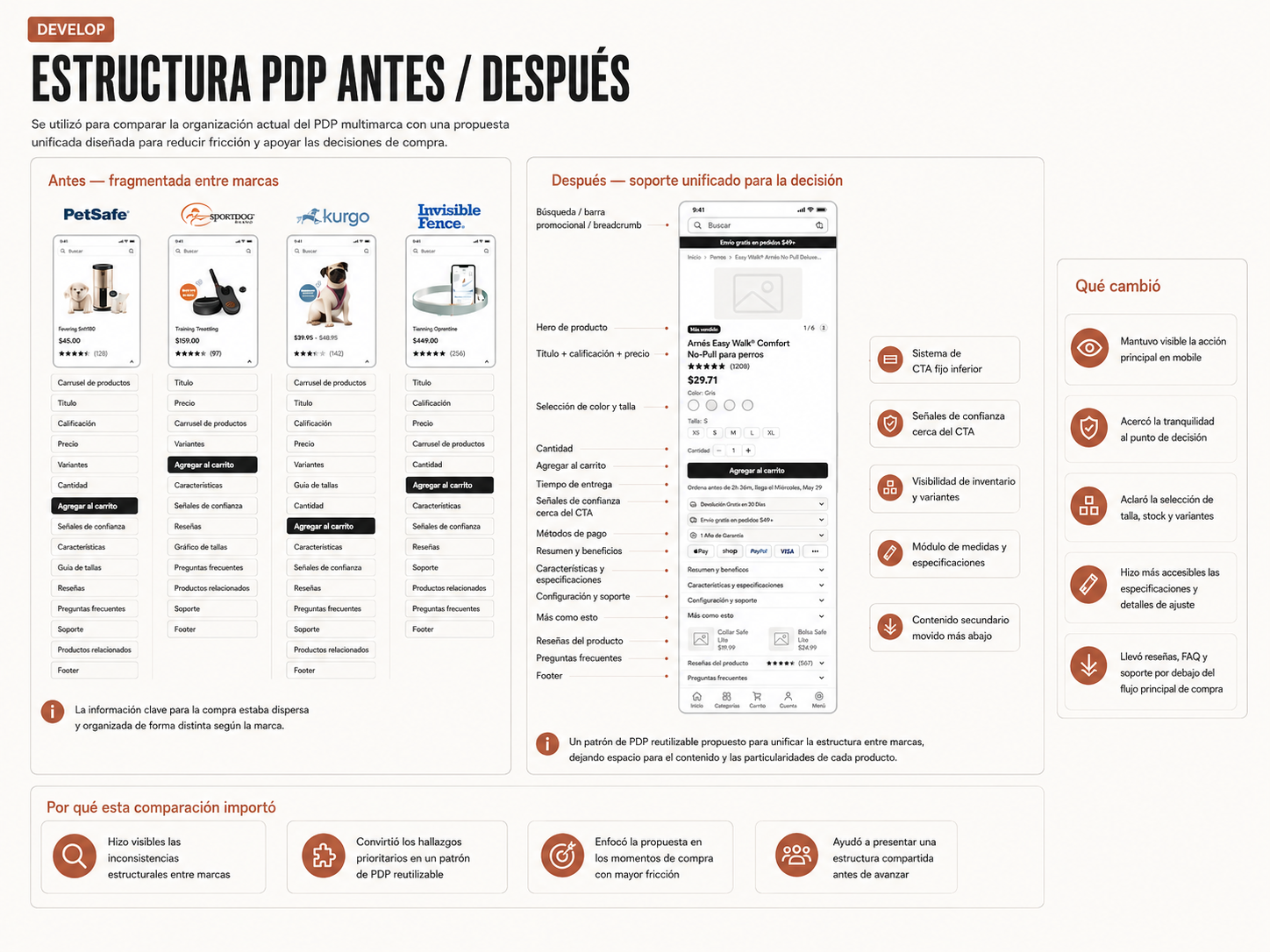
Estructura antes / después que muestra cómo se podía reorganizar la información de producto para reducir la fricción y apoyar las decisiones de compra.
04 — Entregar
Entregar un roadmap que conectara UX con negocio
El entregable final fue un reporte que tradujo investigación, analytics y benchmark en un roadmap claro, pensado para que los stakeholders entendieran qué cambiar y por qué importaba para la conversión.
- Entregué el reporte de evaluación para las cuatro marcas DTC.
- Presenté un roadmap enfocado en el funnel móvil y la PDP.
- Ayudé a mostrar cómo las mejoras UX podían contribuir a mover la conversión de 1.01% a 2.19%.
Cómo usé la IA
Usé Gemini para estructurar el storytelling ejecutivo final, especialmente valioso con un timeline tan corto.
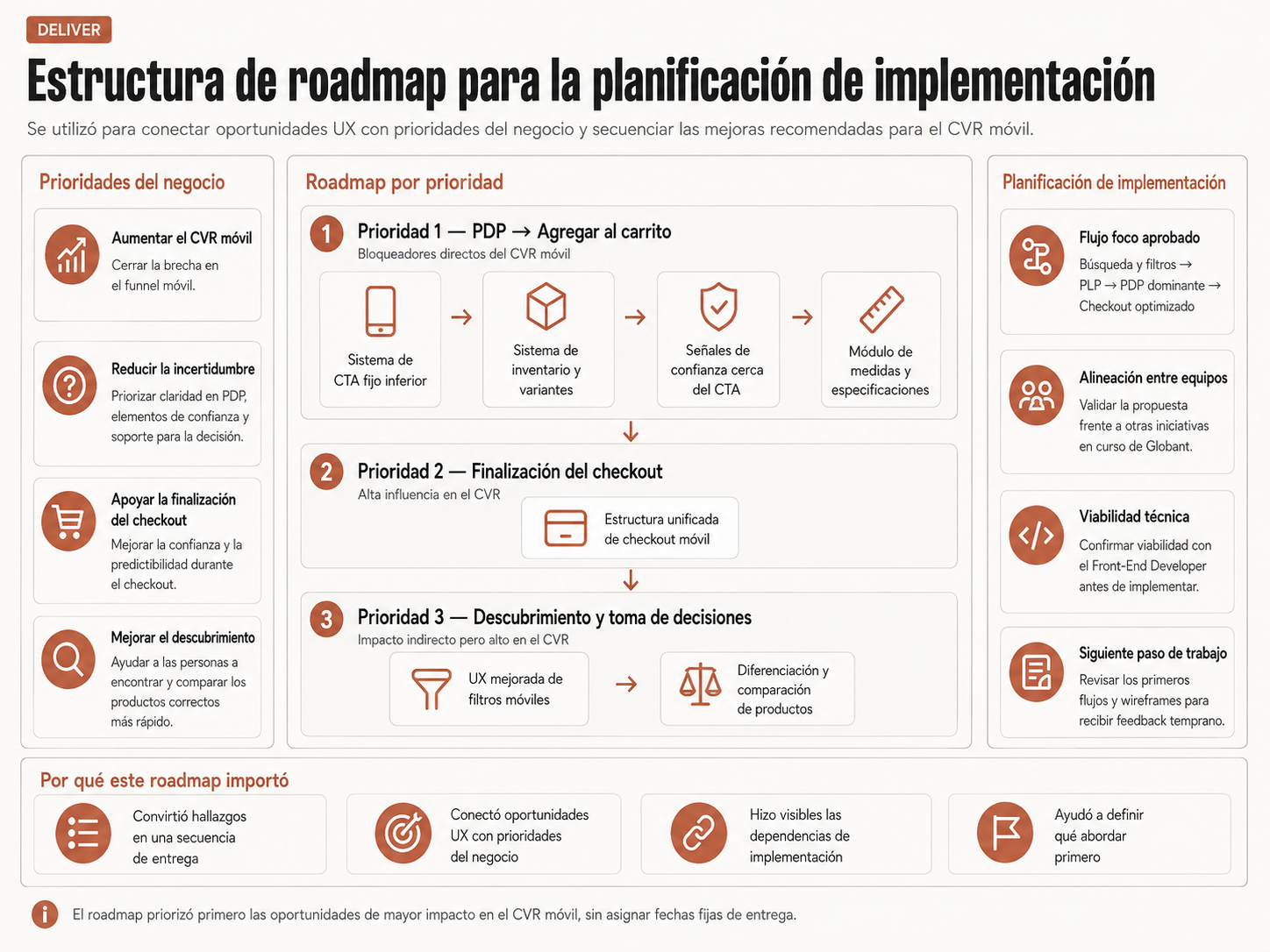
Estructura del roadmap usada para conectar las oportunidades UX con las prioridades de negocio y la planeación de implementación.
Antes / después
Antes
Puntos de fricción difíciles de priorizar en cuatro marcas, con hallazgos y señales de analytics sin una estructura accionable.
Después
Un roadmap enfocado en conversión, que conectó hallazgos cualitativos, analytics y benchmark para la siguiente fase.
Solución final
La propuesta se enfocó en tres mejoras:
Una experiencia de PDP en móvil más clara
Mejor jerarquía, señales de confianza y soporte a la decisión, para que los usuarios entendieran qué estaban comprando.
Un diagnóstico más sólido enfocado en conversión
El diagnóstico conectó fricción cualitativa, analytics y benchmark para mostrar qué problemas pesaban más en la conversión.
Un roadmap estratégico para la implementación
Un roadmap que ayudó al cliente a pasar del diagnóstico a la acción con prioridades claras.
Impacto y resultados
Valor para el usuario
Fricciones identificadas en la PDP y el funnel que afectaban la comprensión y la confianza de compra.
Valor de negocio
Entregué recomendaciones UX orientadas a contribuir al crecimiento de la conversión de 1.01% a 2.19%.
Valor de producto
Un roadmap de mejoras priorizadas para las cuatro marcas DTC.
Valor de equipo / proceso
De hallazgos dispersos a una historia ejecutiva que destrabó la alineación para implementar.
Obstáculos y trade-offs
Con un timeline tan corto, la evaluación tuvo que mantenerse enfocada en las áreas de mayor impacto, sacrificando profundidad donde pesaba menos.
- Trabajar en cuatro marcas en solo seis semanas.
- Conectar hallazgos cualitativos con analytics sin complicar la historia.
- Reformular la narrativa del proyecto después de feedback crítico.
- Trabajar en inglés y lograr una presentación final clara y persuasiva.
Qué aprendí
Encontrar problemas es la mitad fácil del liderazgo UX; la difícil es ayudar al equipo a ver cuáles importan y qué hacer al respecto.
- Aprendí a liderar una evaluación UX bajo mucha presión de tiempo.
- Conectar hallazgos UX con KPIs como conversión e ingresos es lo que hace accionable una evaluación.
- El storytelling importa tanto como el análisis al presentar hallazgos complejos.
- Un roadmap sólido es una herramienta para decidir, no una lista de recomendaciones.
Seis semanas, cuatro marcas y mucha ambigüedad que liderar. PetSafe es un buen ejemplo de cómo conecto hallazgos UX con objetivos de negocio bajo presión, usando IA para avanzar más rápido donde ayuda, y convirtiendo una evaluación caótica en un roadmap sobre el que el equipo realmente pudo actuar.
Stephanie Cacheo — Senior Product Designer / UX Lead