Bancolombia — Experiencias de Inversión
Hacer que productos de inversión complejos fueran más fáciles de entender, navegar y validar a través de una estructura UX más clara.
Diseñé artefactos UX para las experiencias digitales de inversión de Bancolombia: flujos, arquitectura de información, wireframes, prototipos y materiales de validación que ayudaron a traducir productos financieros complejos en experiencias más comprensibles.
Empresa
Bancolombia
Industria
Finanzas / Banca / Productos de inversión
Rol
UX Designer
Tipo de producto
Experiencias digitales de inversión / Canales financieros
Duración
Aug 2019 – Apr 2021
Equipo
UX, Producto, Negocio, Desarrollo, Research, Stakeholders
Métodos
UX Research, Arquitectura de información, User Flows, Wireframes, Prototyping, Testing Scripts, Validation Support, Hi-fi Support
Herramientas
Figma / Sketch / InVision / Miro / Adobe Creative Cloud
Estado
Artefactos UX entregados / Bajo NDA
Confidencialidad
Parte de este proyecto está bajo NDA: la información financiera, las pantallas y los resultados de testing aparecen difuminados o simplificados. Puedo compartir más detalle en una entrevista o revisión de portafolio.
Contexto
Bancolombia necesitaba apoyo UX para sus experiencias digitales de inversión, canales donde los usuarios deben entender productos financieros y completar tareas con confianza y precisión.
Los productos de inversión combinan terminología poco familiar, presión al decidir y muchos pasos. Mi trabajo fue estructurar esas experiencias para hacerlas comprensibles y fáciles de validar.
Por qué importaba
Lo difícil fue traducir la complejidad financiera en algo usable, y validar lo suficiente para que negocio y desarrollo pudieran decidir con confianza antes de construir.
Mi rol
Trabajé como UX Designer, en colaboración cercana con los equipos de negocio, producto y desarrollo.
- Diseñé user flows para las experiencias de inversión.
- Estructuré la arquitectura de información para hacer más navegable el contenido financiero.
- Creé wireframes y prototipos para comunicar la lógica del producto y los caminos del usuario.
- Apoyé research, testing scripts y actividades de validación.
- Apoyé el diseño de alta fidelidad a partir de la dirección validada.
El reto
El reto era hacer más fácil de entender la información financiera compleja sin descuidar los objetivos de negocio ni la confianza del usuario.
- Reto de usuario: los usuarios necesitaban entender los productos, comparar información y avanzar con confianza.
- Reto de negocio: Bancolombia necesitaba comunicar sus productos de inversión con más claridad y alinear a los equipos alrededor de la experiencia.
- Reto de diseño: había que organizar información financiera compleja y validar, protegiendo a la vez información sensible.
Problem statement
¿Cómo podríamos ayudar a los usuarios a entender y navegar las experiencias de inversión, apoyando a la vez la validación y la preparación para desarrollo?
Objetivos y criterios de éxito
Objetivos de usuario
- Entender con más claridad la información de inversión.
- Reducir la confusión causada por terminología y pasos complejos.
Objetivos de negocio
- Alinear a negocio, producto, diseño y desarrollo alrededor de una dirección UX compartida.
- Reducir la ambigüedad antes de la implementación.
Objetivos de diseño
- Crear user flows, arquitectura de información, wireframes y prototipos claros.
- Apoyar el testing de usabilidad con scripts y artefactos de research.
- Traducir la lógica de producto compleja en experiencias más fáciles de entender.
Proceso
01 — Descubrir
Entender la complejidad financiera antes de definir la experiencia
Antes de pasar a los wireframes, identifiqué qué información necesitaban los usuarios, dónde podía volverse confusa la experiencia y qué partes requerían validación.
- Revisé la información de producto, los requerimientos y los insumos de research.
- Identifiqué las tareas clave y los puntos de decisión del usuario.
- Mapeé dónde la terminología financiera podía generar confusión.
- Trabajé con stakeholders para clarificar el alcance, los supuestos y las prioridades.
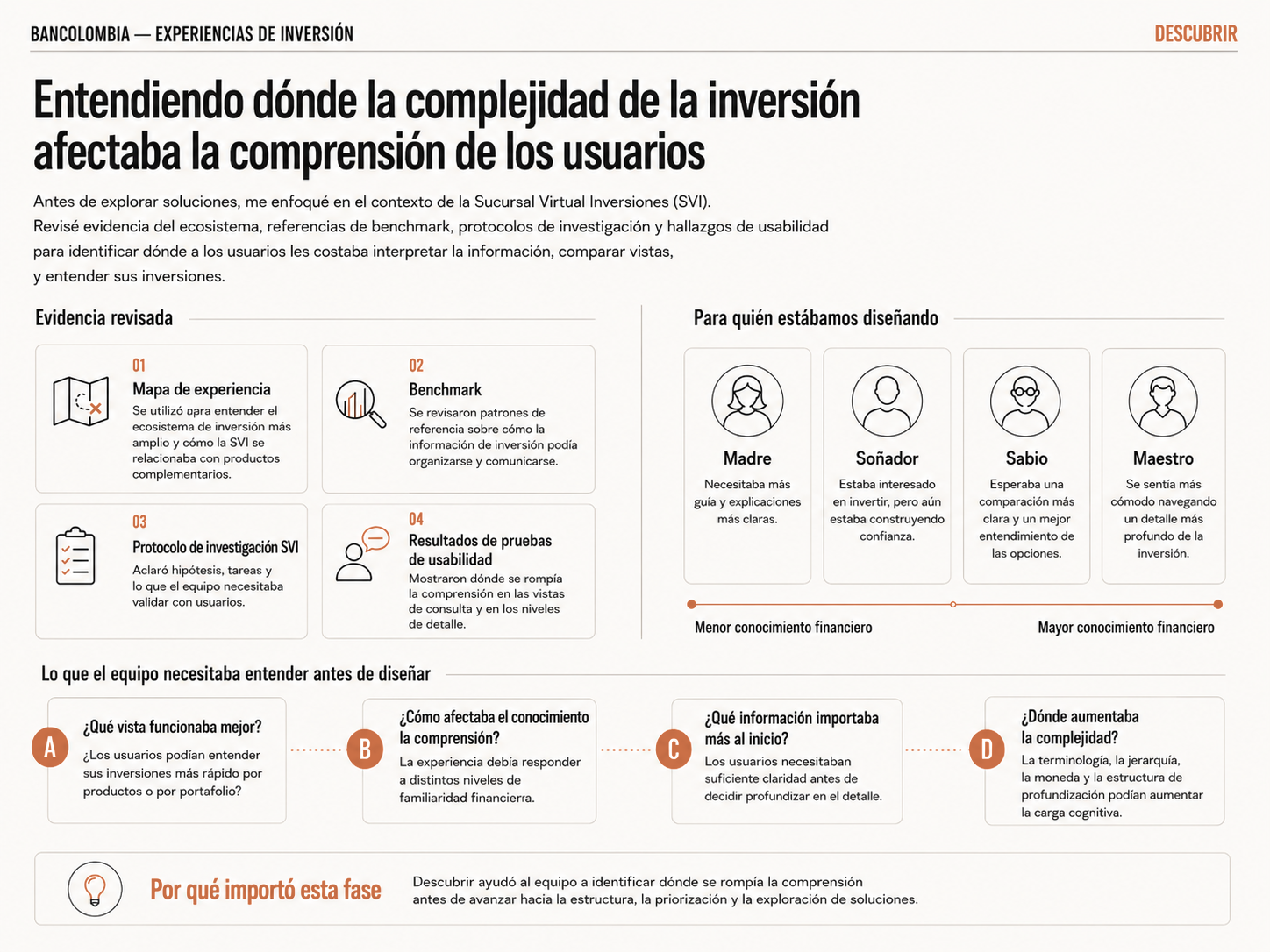
Estructura de discovery usada para entender dónde la complejidad del producto de inversión podía afectar la comprensión y la toma de decisiones del usuario.
02 — Definir
Convertir la complejidad de inversión en flujos claros
Luego traduje la complejidad financiera en una dirección UX revisable por negocio, producto, diseño y desarrollo.
- Definí user flows para las tareas de inversión.
- Estructuré la arquitectura de información para reducir la carga cognitiva.
- Preparé la lógica de flujo para la validación y el posterior diseño de alta fidelidad.
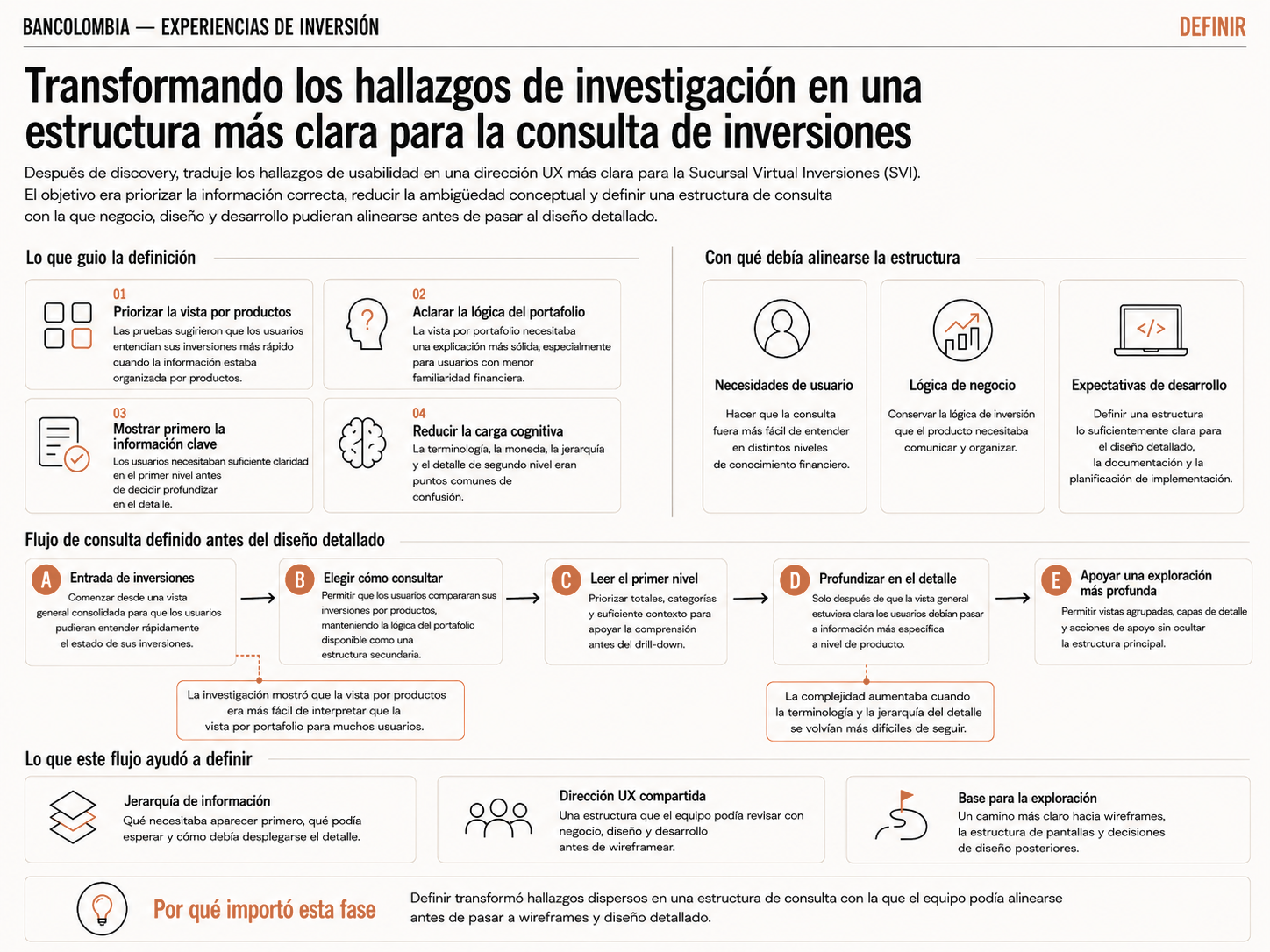
User flow usado para alinear la lógica de negocio, las necesidades del usuario y las expectativas de desarrollo antes de pasar al diseño detallado.
03 — Desarrollar
Explorar wireframes, prototipos y materiales de validación
Con la estructura clara, creé wireframes, prototipos y materiales de research: la idea era hacer la experiencia lo bastante tangible para que stakeholders y usuarios reaccionaran antes de comprometer la implementación.
- Construí prototipos para comunicar la navegación, la jerarquía y la lógica de interacción.
- Apoyé testing scripts y artefactos de research para la validación.
- Iteré con el feedback de stakeholders y las actividades de validación.
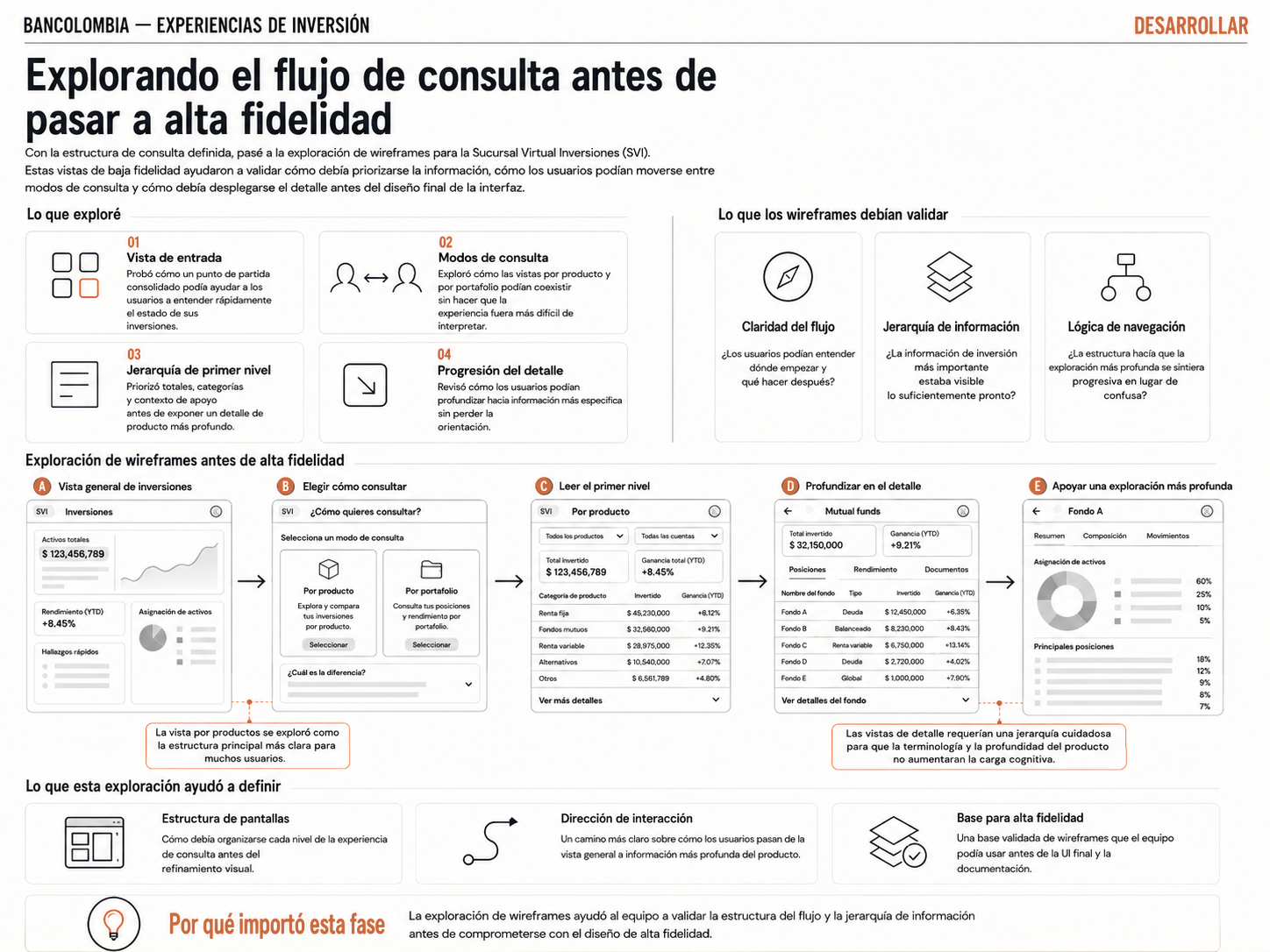
Exploración de wireframes usada para validar la estructura del flujo y la jerarquía de información antes de pasar a alta fidelidad.
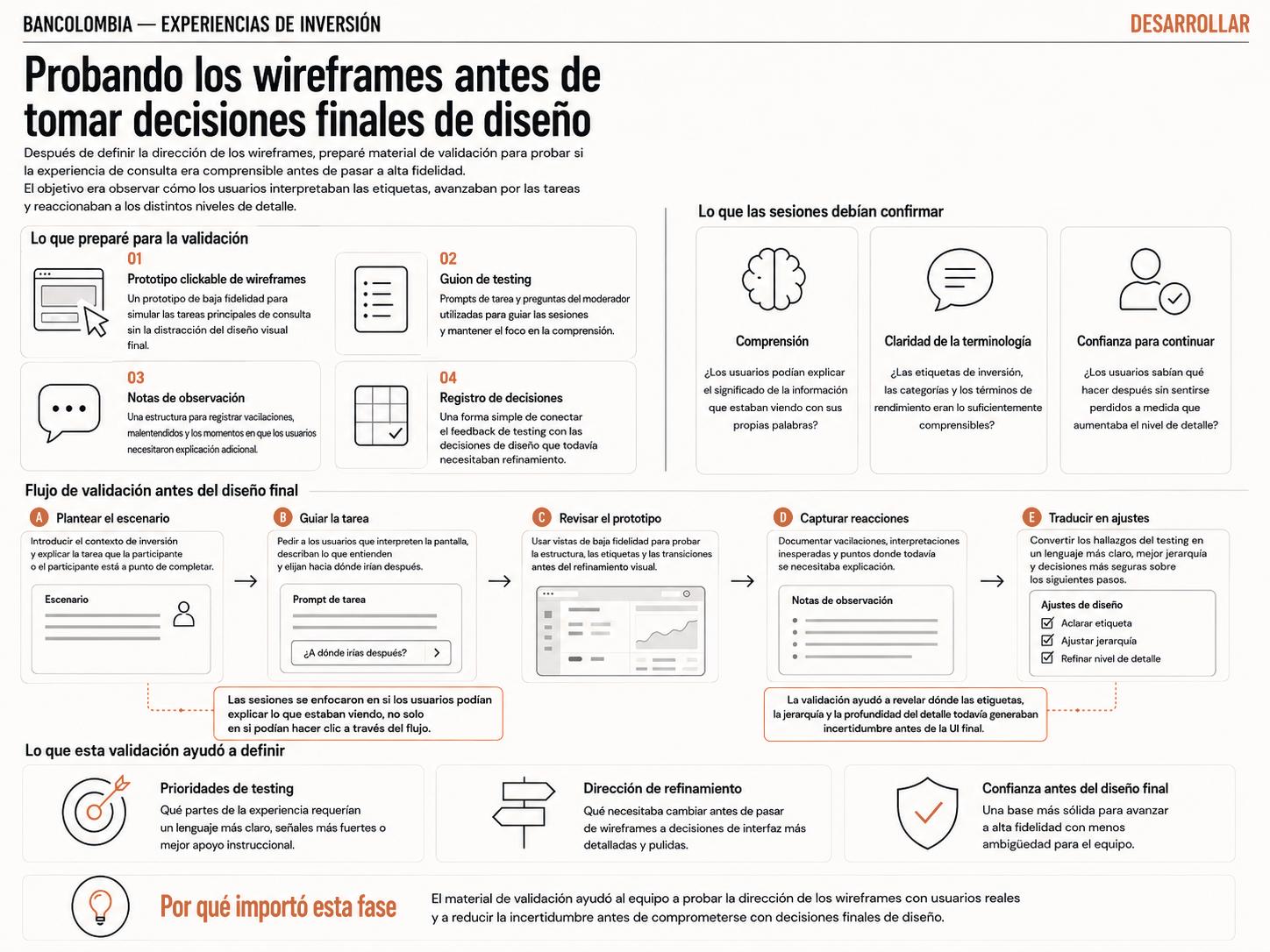
Material de validación usado para apoyar el testing con usuarios y reducir la incertidumbre antes de las decisiones finales de diseño.
04 — Entregar
Apoyar la definición final de UX y la alineación con desarrollo
Los entregables (flujos, arquitectura de información, prototipos y artefactos de validación) ayudaron a los stakeholders a alinearse y llegaron a desarrollo con menos dudas.
- Entregué user flows, wireframes, prototipos y artefactos de arquitectura de información.
- Ayudé a sintetizar los hallazgos de las actividades de validación.
- Apoyé el diseño de alta fidelidad con base en la dirección validada.
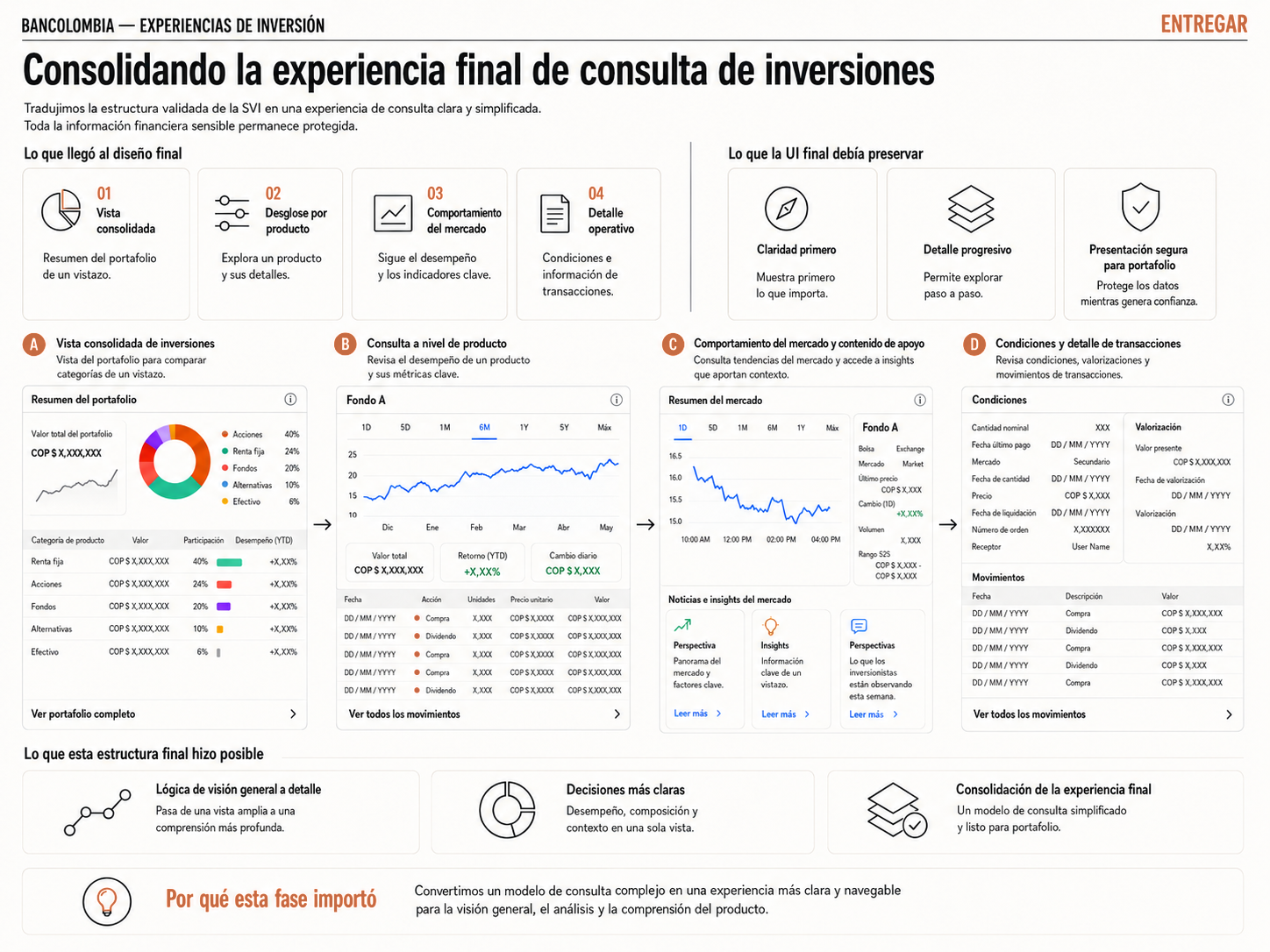
Experiencia final simplificada para fines de portafolio, mostrando la estructura sin exponer información financiera sensible.
Antes / después
Antes
Información financiera compleja, terminología difícil y flujos que generaban dudas en usuarios y stakeholders.
Después
User flows, arquitectura de información y prototipos claros que mejoraron la comprensión y la alineación.
Solución final
El trabajo se enfocó en tres mejoras:
Flujos de inversión más claros
User flows que hicieron más fáciles de entender y validar los recorridos financieros.
Arquitectura de información más sólida
Organicé la información de inversión para reducir la carga cognitiva y hacer el contenido más navegable.
Artefactos UX listos para validación
Wireframes, prototipos y materiales de testing que apoyaron decisiones más sólidas antes del desarrollo.
Impacto y resultados
Valor para el usuario
Experiencias de inversión más fáciles de entender y navegar.
Valor de negocio
Negocio, producto, diseño y desarrollo alineados en torno a la misma experiencia.
Valor de producto
Lógica financiera traducida en flujos y prototipos listos para validación.
Valor de equipo / proceso
Decisiones de experiencia tangibles y más fáciles de discutir antes del desarrollo.
Obstáculos y trade-offs
Trabajar en un entorno financiero regulado implicó colaborar con legal y compliance para que contenido y flujos cumplieran los estándares sin perder claridad. El reto era hacer los productos comprensibles sin perder su significado esencial.
- Traducir productos financieros complejos en experiencias de usuario claras.
- Manejar información financiera sensible bajo confidencialidad.
- Alinear a múltiples stakeholders en torno a la misma dirección UX.
- Trabajar con contenido donde la confianza y la precisión eran críticas.
Qué aprendí
El UX financiero exige precisión y confianza: el objetivo es estructurar la complejidad para que los usuarios entiendan lo que importa, no eliminarla.
- Aprendí a traducir productos financieros complejos en flujos digitales más claros.
- Mejoré la forma en que apoyo la validación con scripts, prototipos y research.
- La arquitectura de información es una de las herramientas más fuertes para quitar ambigüedad.
- Gané soltura trabajando con información sensible bajo confidencialidad.
Mirando hacia atrás, este es un buen ejemplo de cómo trabajo cuando me sumerjo en un dominio que no conozco bien: bajar el ritmo, estructurar la información con cuidado, construir artefactos que las personas puedan validar de verdad, y usar eso para convertir la ambigüedad en algo en lo que el equipo pueda confiar.
Stephanie Cacheo — Senior Product Designer / UX Lead